
Live airbrushing is easy for guests, but the behind-the-scenes setup matters. The best stations give artists enough room to work safely, make product choices obvious and move finished items away from the painting area without creating congestion.
- Two sturdy tables and two chairs per artist
- Reliable nearby electrical power
- Protected, well-lit working area
- Clear guest ordering and pickup flow
- Merchandise counted and sorted before opening
- Load-in access approximately 60 minutes early
1. Tables and chairs for each artist
A typical 3JS station requests two tables and two chairs per artist. One table supports the active painting area and equipment. The second provides space for supplies, blank products, design references and finished-item handling.
Sturdy venue tables are better than small cocktail tables or unstable folding surfaces. Before the event, confirm table sizes, linens and whether the venue permits protective coverings. Keep food, drinks and unrelated décor away from the active work surface.
2. Reliable electrical power
Airbrush compressors and supporting equipment need dependable power. For planning purposes, 3JS generally requests one nearby 15-amp electrical connection per artist unless the proposal specifies a shared-power plan.
Tell the venue that the activation uses powered equipment. Ask whether the outlet is on a dedicated circuit and avoid placing catering appliances, heaters, high-output lighting or other high-draw equipment on the same circuit. For outdoor events, power connections and extension paths must be weather-safe and positioned where guests will not trip over them.
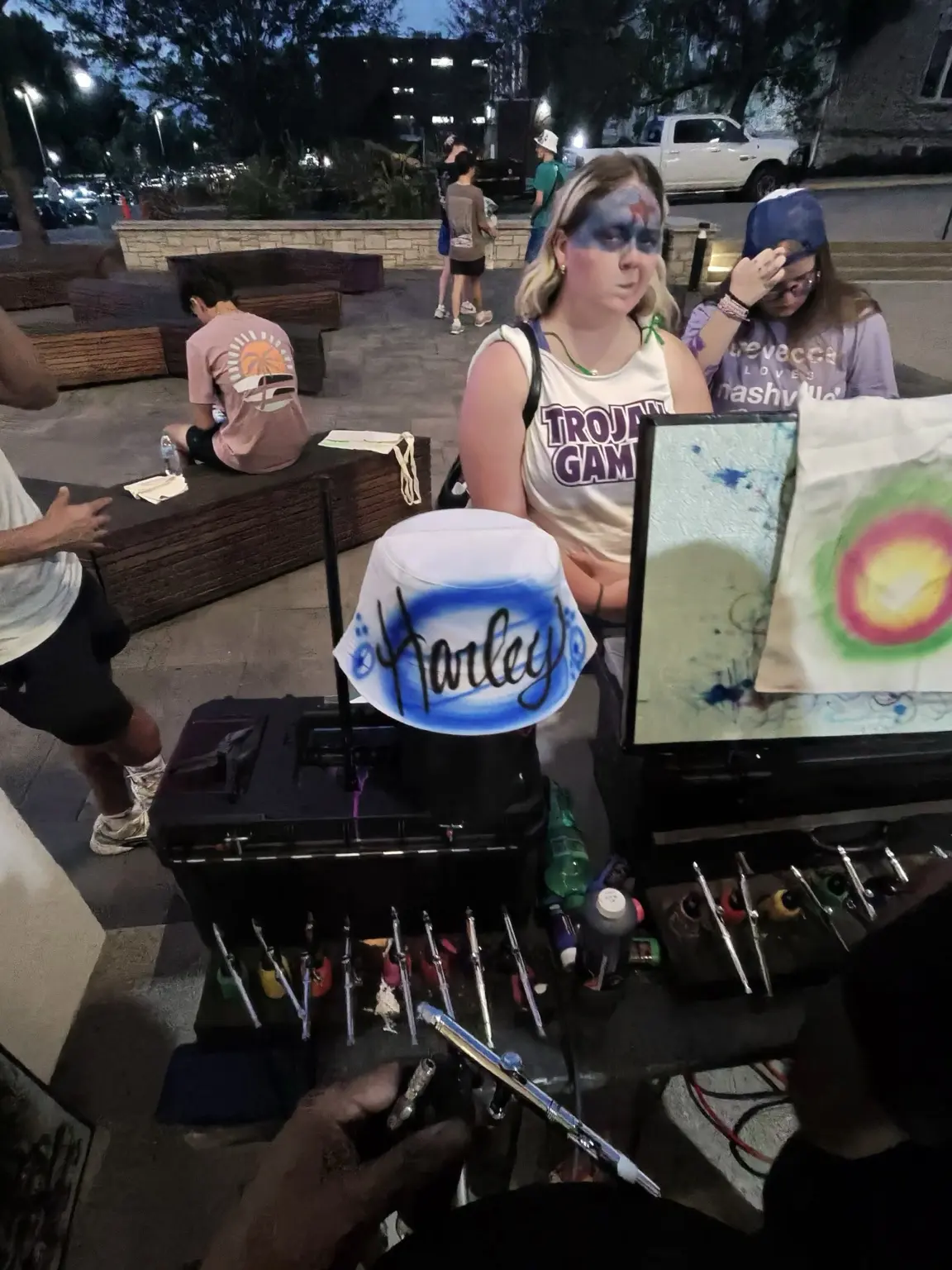
3. Enough space for artists, guests and finished items
The station footprint must include more than the tables. Leave working room behind each artist, a decision area where guests can review designs and a separate path for pickup. The exact footprint depends on artist count, venue layout and whether guests order from a line or circulate through an activation.
For larger teams, place stations together in a clearly defined zone. This makes it easier to direct guests, balance the lines and move orders between selection, painting and pickup. See our guide to choosing the right number of airbrush artists before finalizing the floor plan.
4. A simple design-selection process
Open-ended requests can slow an event line. 3JS commonly uses a focused menu of approximately 16 pre-approved designs that can usually be painted in three minutes or less. Guests still choose names, colors and styles, but the decision process stays fast enough for event volume.
Display the menu before guests reach the artist. If possible, have a team member or event volunteer help each guest confirm the product, name spelling, design and colors before the item reaches the painting table.
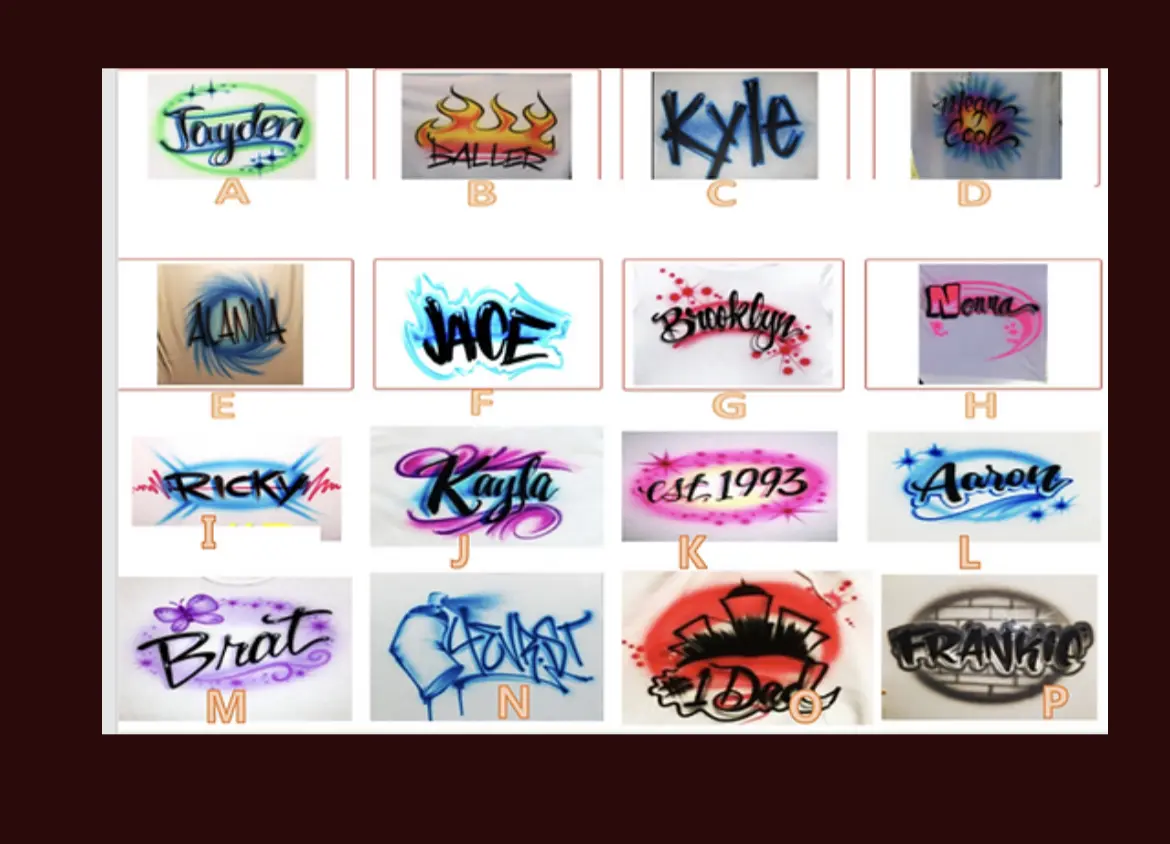
5. Merchandise ready before painting begins
Confirm who is supplying the blanks and how they will be distributed. 3JS can customize trucker hats, shirts, canvas bags, bucket hats, bandannas, jerseys and other event products. If the client supplies the merchandise, it should arrive clean, unwrapped when practical, and sorted by product, color and size.
For apparel, decide whether guests will choose sizes at the station or receive items before entering the line. For multiple products, use clear signs or tickets so the artist knows exactly what each guest is eligible to receive.
6. Lighting, ventilation and weather protection
Artists need enough light to see names, colors and fine details. Dim ballrooms, concerts and evening events may require additional task lighting. Indoor venues should place the activation in an approved area with normal ventilation and reasonable separation from food service.
Outdoor airbrushing is possible when the station is protected from rain, strong wind and direct weather exposure. A level surface, properly secured tent or cover, side protection when needed, and a safe power plan should be confirmed before event day. Always establish a weather backup for conditions that could make powered equipment or painted products unsafe.
7. Load-in, parking and a 60-minute setup window
3JS typically plans to arrive approximately 60 minutes before painting begins. That time is used to unload, arrange the stations, test equipment, organize merchandise and review the guest flow with the event contact.
Send parking passes, loading-dock instructions, elevator access, security procedures and the on-site contact’s mobile number before the event. If the venue has a firm load-in deadline, include it in the agreement and day-of schedule.
8. Venue approvals, insurance and branding
Ask the venue whether it needs a certificate of insurance, vendor forms, floor protection or power approval. Corporate and university events may also require designs, colors and logos to be approved in advance. Completing those steps early prevents last-minute changes at the station.
For branded activations, clarify whether logos will be screen printed, heat applied, stenciled or incorporated into an approved airbrush design. Examples from our past event portfolio include corporate conferences, universities, professional sports venues and private celebrations.
How setup changes by event type
- Corporate activations: Prioritize branded design approval, clean presentation, short lines and clear sponsor visibility. See our corporate event services.
- Universities: Plan for arrival surges, student choice and a team large enough for the participation window. Explore college and university events.
- Sports and festivals: Confirm outdoor protection, public crowd flow, security and dependable power across a long footprint.
- Weddings and private events: Coordinate colors, product choices and the activation schedule with other entertainment. See private celebration options.
Frequently asked questions
Do live airbrush artists need electricity?
Yes. Airbrush equipment normally requires reliable electrical power. For 3JS events, planners should generally provide one nearby 15-amp power connection per artist unless the event proposal specifies a different arrangement.
How many tables and chairs does each artist need?
A typical 3JS setup requests two tables and two chairs per artist so there is room for painting, supplies, products and finished-item handling.
Can live airbrushing be done outdoors?
Yes, when the work area is protected from rain, excessive wind and direct weather exposure, with stable tables, adequate lighting and safe access to power.
How early should the artists arrive?
3JS typically plans to arrive approximately 60 minutes before painting begins so the team can unload, organize stations, test equipment and review the guest flow.