
A bring-your-own-item station can feel personal: employees bring a favorite jacket, students bring a campus shirt, or wedding guests bring a tote they will actually use. The challenge is that every unfamiliar item introduces a new material, shape, coating and handling question.
For most corporate, university and high-volume events, tested blanks supplied by the host or 3JS are the most dependable choice. A guest-supplied option can work when it is limited to a short, written list and the intake team checks each item before it reaches an artist.
Why “bring anything” is difficult at a live event
An artist cannot assume that paint will behave the same way on a cotton T-shirt, water-resistant jacket, coated backpack, leather purse and plastic tumbler. Some items may have treatments that affect adhesion. Others may not sit flat, may contain hardware or electronics, or may require a preparation and curing process that is not part of the live setup.
Unknown items also make timing unpredictable. The team has to inspect the surface, find a workable design area and explain any limitation before painting. That reduces the minutes available for actual guest personalization.
| Item question | What to confirm | Possible event-day issue |
|---|---|---|
| Material | Fiber, surface and coating are compatible | Paint may not perform as expected |
| Condition | Item is new or clean, dry and undamaged | Dirt, oils and wear can affect the surface |
| Shape | A safe, stable painting area is available | Curves, seams and hardware can limit placement |
| Color | Approved colors remain visible | Low contrast can make names hard to read |
| Value | Guest accepts the written program rules | Irreplaceable items create unnecessary risk |
The safest option: provide tested event merchandise
When every guest starts with the same hat, shirt, bag or other approved blank, 3JS can test the material, plan the design area and organize the station before the first order. The host also knows how many items are available and can keep sponsor, VIP or staff inventory separate.
That consistency is one reason tested event merchandise works well for branded conferences, campus programs and fan experiences. Review customizable product options and the guide to choosing the best products for live airbrushing.
If guests bring items, publish a short approved list
A workable policy might allow only new, clean cotton or cotton-blend T-shirts in light or medium colors, or only a specific hat model purchased through an event link. The narrower the product list, the easier it is to test and explain.
State what is not accepted. Examples can include worn or dirty clothing, luxury or irreplaceable items, shoes, safety equipment, items with electronics, heavily coated fabrics, difficult three-dimensional objects and products without a suitable design area. The exact list should come from the approved event process—not from a generic assumption that every surface can be painted.
Send guests a link to one or two approved products, or provide the blanks on site. Guests still choose their name, colors or design while the host keeps the materials predictable.
Use a real sample before announcing the program
Test the exact brand, model, color and material guests will bring. Photograph the accepted sample and record the design dimensions, placement, paint colors and handling instructions. If several products are allowed, prepare and approve a sample of each one.
A product photo or fabric description is not the same as a physical test. Manufacturing changes, surface treatments and construction details can affect the result. The same testing principle applies when a client supplies event hats; compare the responsibilities in Should You Provide Your Own Hats for a Live Airbrush Event?
Create an intake checkpoint before the artist table
Do not ask the artist to inspect the item, take the order, confirm spelling and paint at the same station. A separate intake person can check the item against the approved list, identify the design area and attach an order number.
- Guest presents the item before joining the production queue.
- Staff checks product type, condition, color and approved painting area.
- Guest chooses from the event design menu and confirms name spelling.
- Staff records the order number and any approved handling note.
- The item moves to an artist, then to the drying and pickup area.
The guest-ordering guide explains order tickets, queues and pickup in more detail.
Plan conservatively for capacity
Approximately 25 standard items per artist per productive hour is a useful starting estimate for a streamlined menu on consistent products. It is not a guarantee for mixed guest-supplied items. Inspections, unusual placement and extra handling can reduce the production rate.
| Program format | Capacity predictability | Best use |
|---|---|---|
| One tested host-provided blank | Highest | Large corporate, college and festival events |
| Two or three tested blank options | Moderate to high | Programs that want controlled guest choice |
| One exact guest-purchased product | Moderate | Pre-registered groups with clear instructions |
| Open-ended guest-supplied items | Low | Small, flexible events with inspection time |
If the goal is to serve a fixed quantity, build the plan around productive artist time, not the event’s full door-open period. Use the artist staffing calculator and line-management guide, then add time for intake and refusals.
Set expectations about refusals and results
The event invitation should say that bringing an item does not guarantee acceptance. The artist team needs authority to refuse anything outside the tested process or anything that cannot be handled safely and professionally at the station.
A written policy should also explain the approved design size, placement and menu; whether the item must be new; the final order cutoff; and what happens if an item is not accepted. For a company or university, route the policy through the appropriate event, legal or risk-management contact before promotion.
Real 3JS events show the value of a controlled product plan
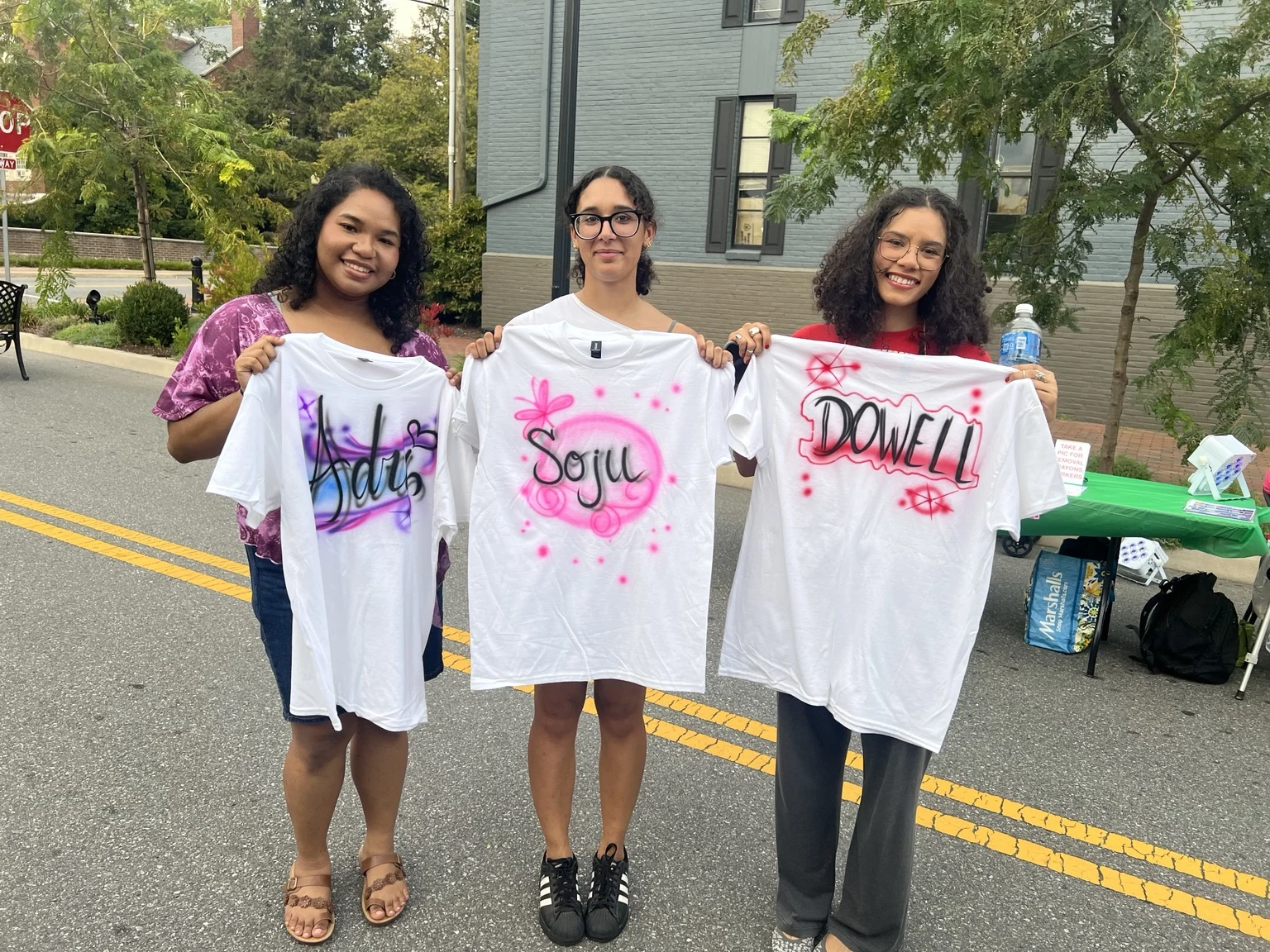
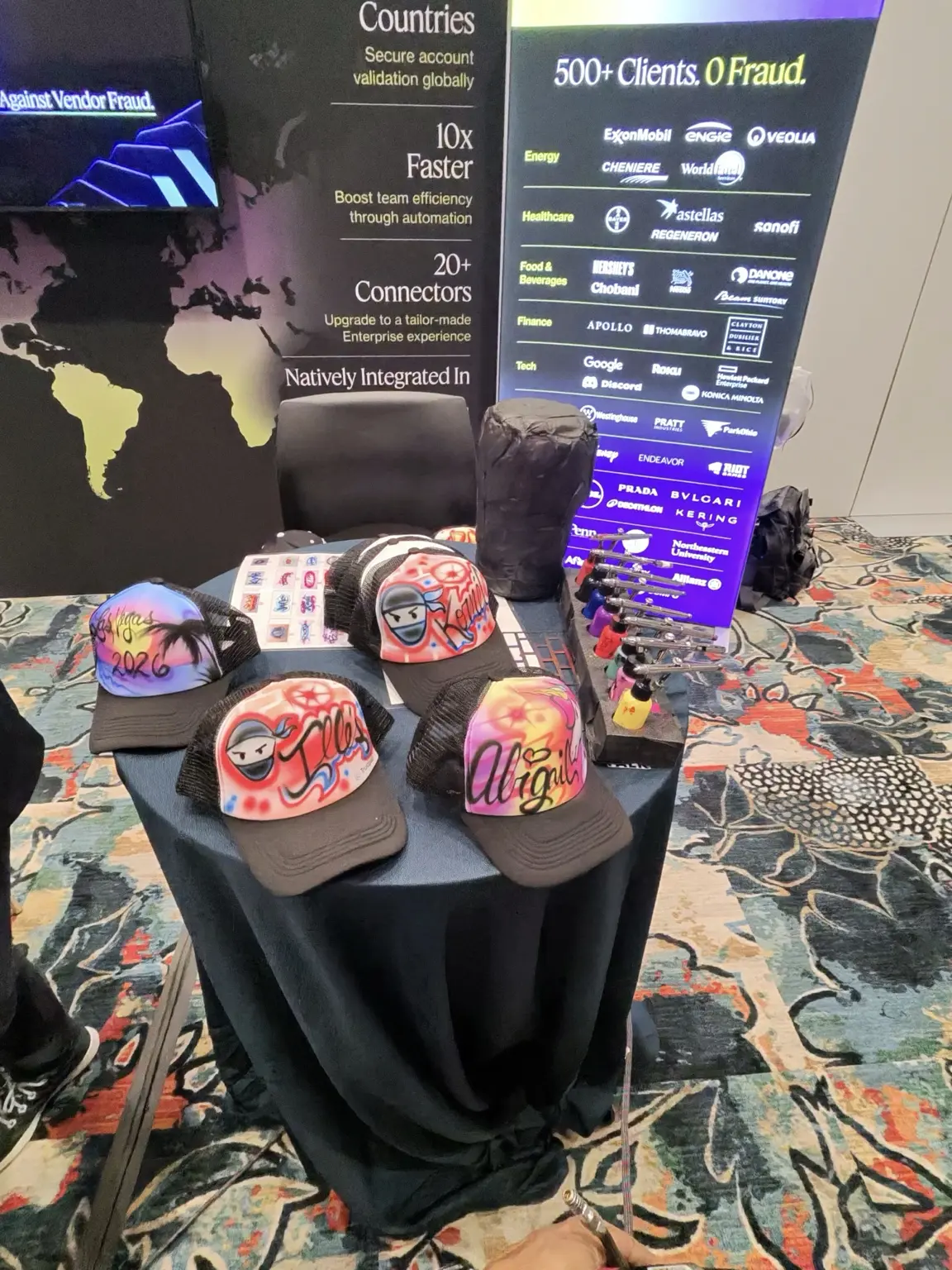
3JS has delivered live personalization for corporate programs such as Trustpair in Las Vegas and campus events including Roanoke College’s Fall Festival. These galleries show guests receiving individualized pieces within a planned merchandise and design experience.
They are examples of consistent live-event execution, not claims that the photographed guests supplied the items. For unknown guest-owned products, 3JS would first need to evaluate the proposed materials and event rules.
A practical decision checklist
- Decide whether guests truly need to supply items or only want personalization choices.
- Prefer host-provided, tested blanks for high-volume events.
- If BYO is allowed, limit it to exact approved products and materials.
- Test physical samples before promoting the offer.
- Publish clear accepted and prohibited item rules.
- Give intake staff authority to decline unsuitable items.
- Use a fixed design menu, placement and size.
- Separate inspection, ordering, painting, drying and pickup.
- Reduce the capacity estimate to allow for mixed-item handling.
- Document responsibility for rejected, damaged or unclaimed items.
Explore corporate airbrush activations, college and university events, real 3JS event galleries and tested merchandise options. Then share the proposed items, guest count and event window through the event quote form.
Frequently asked questions
Can guests bring their own shirts or hats to be airbrushed?
Sometimes, but only when the event plan defines approved product types, materials, condition and design limits in advance. The artist team may need to refuse an item that is dirty, damaged, coated, unsafe to handle or unsuitable for the approved process.
What guest-supplied items are easiest to airbrush?
New, clean items that match a pre-approved sample are easiest to plan. Cotton or cotton-blend shirts, compatible fabric bags and approved hats may work, but the exact construction, color, coating and available design area must be evaluated.
Why are host-provided blank items usually better for a live event?
Host-provided blanks give the artist team consistent materials, sizes, colors and work surfaces. That improves testing, design consistency, inventory control and production flow while reducing the chance that an item must be refused.
Does a bring-your-own-item event reduce capacity?
It can. Inspecting different items, confirming placement and recording special handling instructions take productive time. Use a conservative capacity plan and do not assume every guest-supplied item will move at the same rate as standardized event merchandise.
Can an artist guarantee the result on an unknown item?
An artist should not promise the same result on every unknown fabric, finish or coating. The host should establish written acceptance rules, and guests should understand that unsuitable items may be declined before an order is accepted.