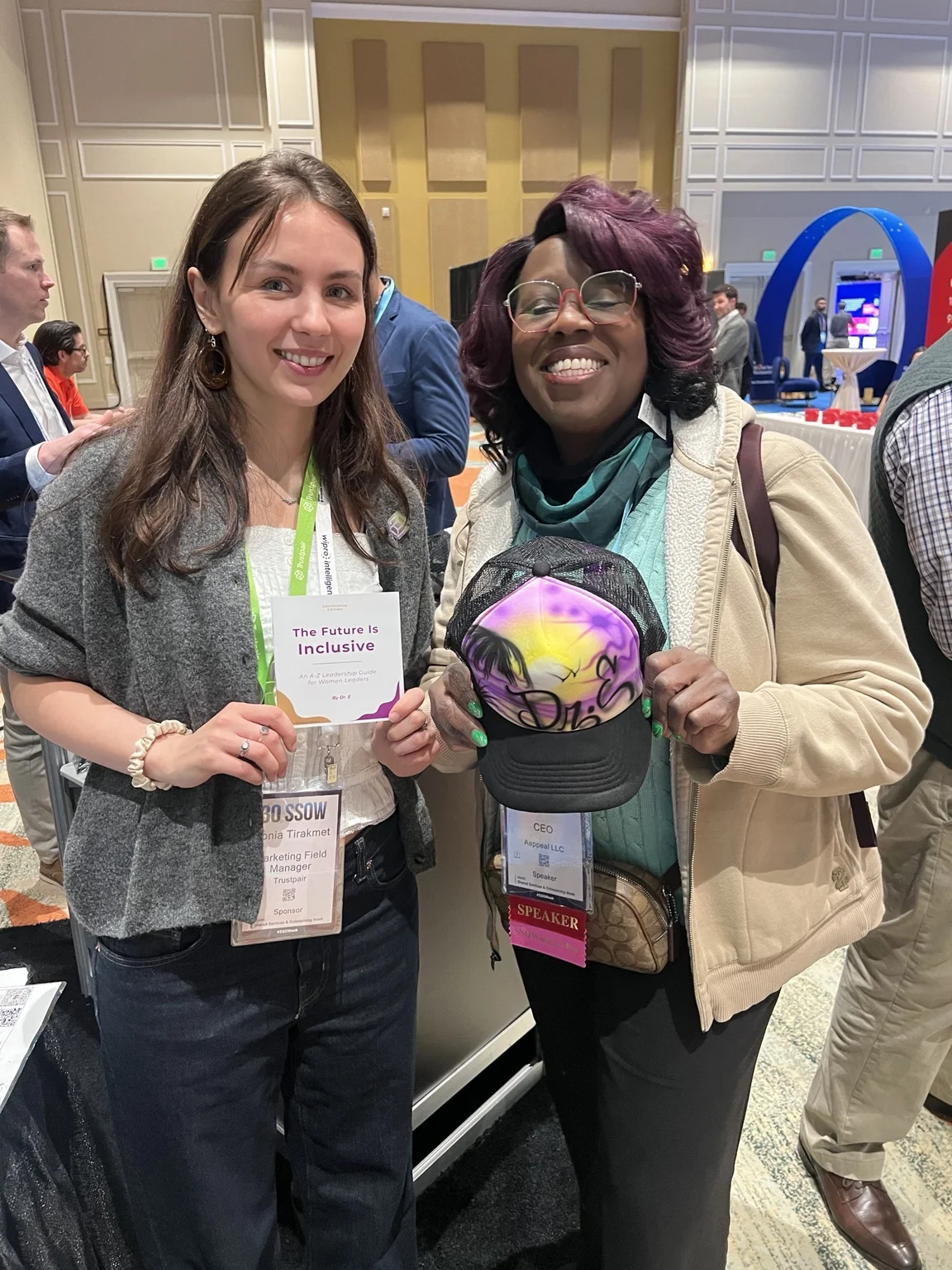
The artwork may be the attraction, but the ordering process determines whether the experience feels organized. A clear system helps guests understand their choices, protects the brand and gives artists more time to paint.
The best setup depends on the event. A small private party may allow guests to speak directly with one artist. A trade show, corporate celebration or homecoming with hundreds of participants usually benefits from a separate ordering point, numbered tickets and a defined pickup area.
What is the basic guest ordering process?
- See the menu: the guest reviews approved merchandise, designs and colors before reaching the order point.
- Choose an item: the guest selects a hat, shirt, tote bag or other available product.
- Add personalization: the guest provides a name, initials or short approved word.
- Confirm the order: an order taker verifies the item, design, colors and exact spelling.
- Receive an order number: the number follows the merchandise and helps the guest identify the finished piece.
- Pick up the item: completed work moves to a protected area where it can be checked and handed to the correct guest.
This sequence can be handled on paper, with a simple digital form or through an event-specific ticket system. The important part is that every order contains the same essential information.
What information should an order include?
| Order detail | Example | Why it matters |
|---|---|---|
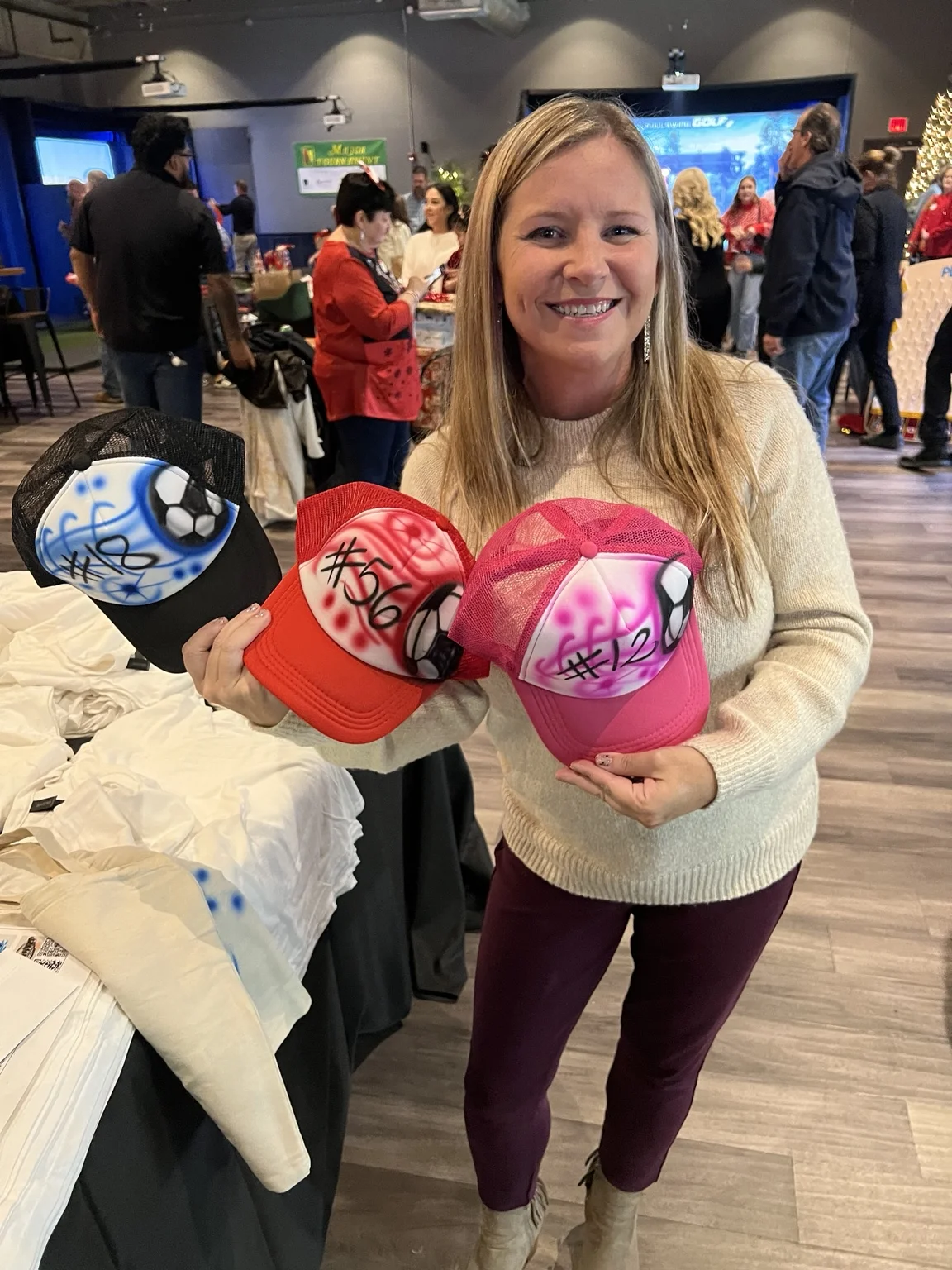
| Order number | 127 | Connects the guest, product and pickup |
| Merchandise | White-front black trucker hat | Prevents product or size mix-ups |
| Design | Menu option 4 | Keeps requests within approved choices |
| Colors | Blue and orange | Supports school, brand or guest preferences |
| Personalization | Maya | Gives the artist the exact lettering |
| Pickup identifier | Ticket 127 or text notification | Helps return the finished item efficiently |
How do you prevent misspelled names?
Do not rely only on hearing a name in a noisy venue. Ask the guest to type or write the name, repeat it back and let the guest visually confirm the spelling before the item reaches the artist. The order should also state whether capitalization, initials, numbers or punctuation are allowed.
For names that are long, establish a character guideline before the event. The artist can suggest a shorter version if the available space will not support the full request.
Should guests order from the artist or a separate attendant?
Direct ordering can work for a small group with simple choices. At a high-volume event, a separate greeter or order taker is usually more efficient. The attendant answers questions, checks spelling and prepares the merchandise while the artist continues painting.
Menu and greeter → order confirmation → artist queue → drying and quality check → numbered pickup.
When the crowd is large, a pickup attendant can organize finished pieces and explain care instructions. This separation keeps guests from reaching across the artist's workspace or searching through completed merchandise.
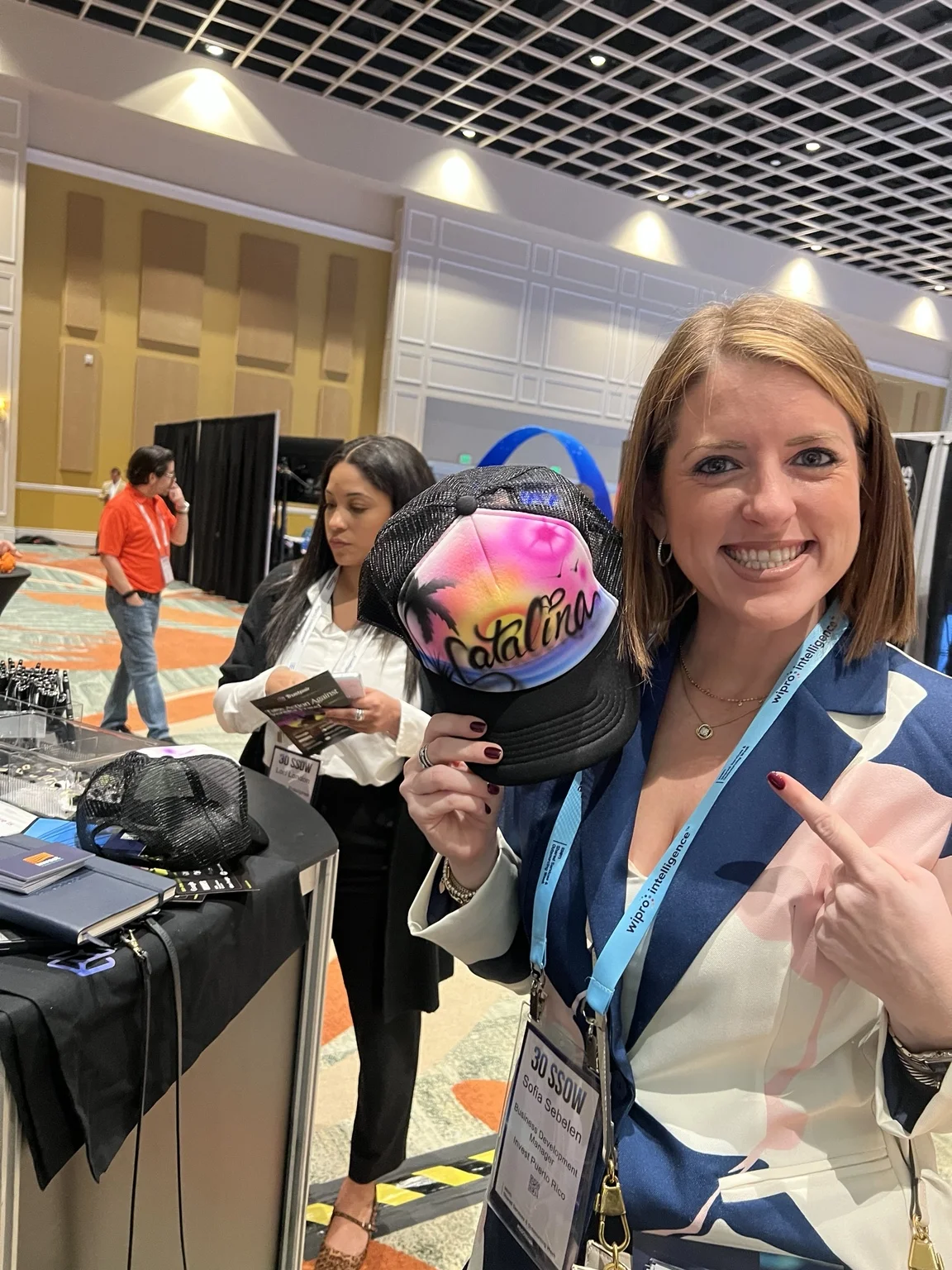
Can ordering support trade show lead capture?
Yes. A brand may ask attendees to scan a badge, complete a short QR form or speak with a representative before submitting an order. Place that step before the design decision so guests understand the exchange and the booth team can manage the line.
Keep the form short and collect only the information the campaign actually needs. Use an order number rather than displaying personal contact details on tickets or finished-item tables. If a sponsor has privacy, consent or follow-up requirements, approve the workflow before the show.
See the Orlando trade show trucker hat activation and the guide to planning a live airbrush trade show activation.
How should the design menu be presented?
Put the menu where guests can study it before they reach the order taker. Use large, readable samples or photographs with short names or numbers. If guests can choose colors, show the approved palette. If logos or campaign elements must remain visible, explain those boundaries in plain language.
A menu with 6 to 12 core designs is often a practical starting point for a busy event. Fewer options speed decisions; more options can make a smaller event feel more custom. Read how guest design choice works.
How does ordering change for shirts and other sized products?
When the merchandise has sizes, the order point also becomes an inventory station. Display the available sizes, mark them clearly and track quantities as orders are accepted. Do not promise a size that is no longer available. For hats and tote bags, fit and inventory decisions are usually simpler because the product is adjustable or size-free.
At a corporate shirt activation in Wake Forest, the finished wearable item was part of the guest experience. For similar programs, planners should match the order form to the product, size mix and target quantity.
What is different at a college or homecoming event?
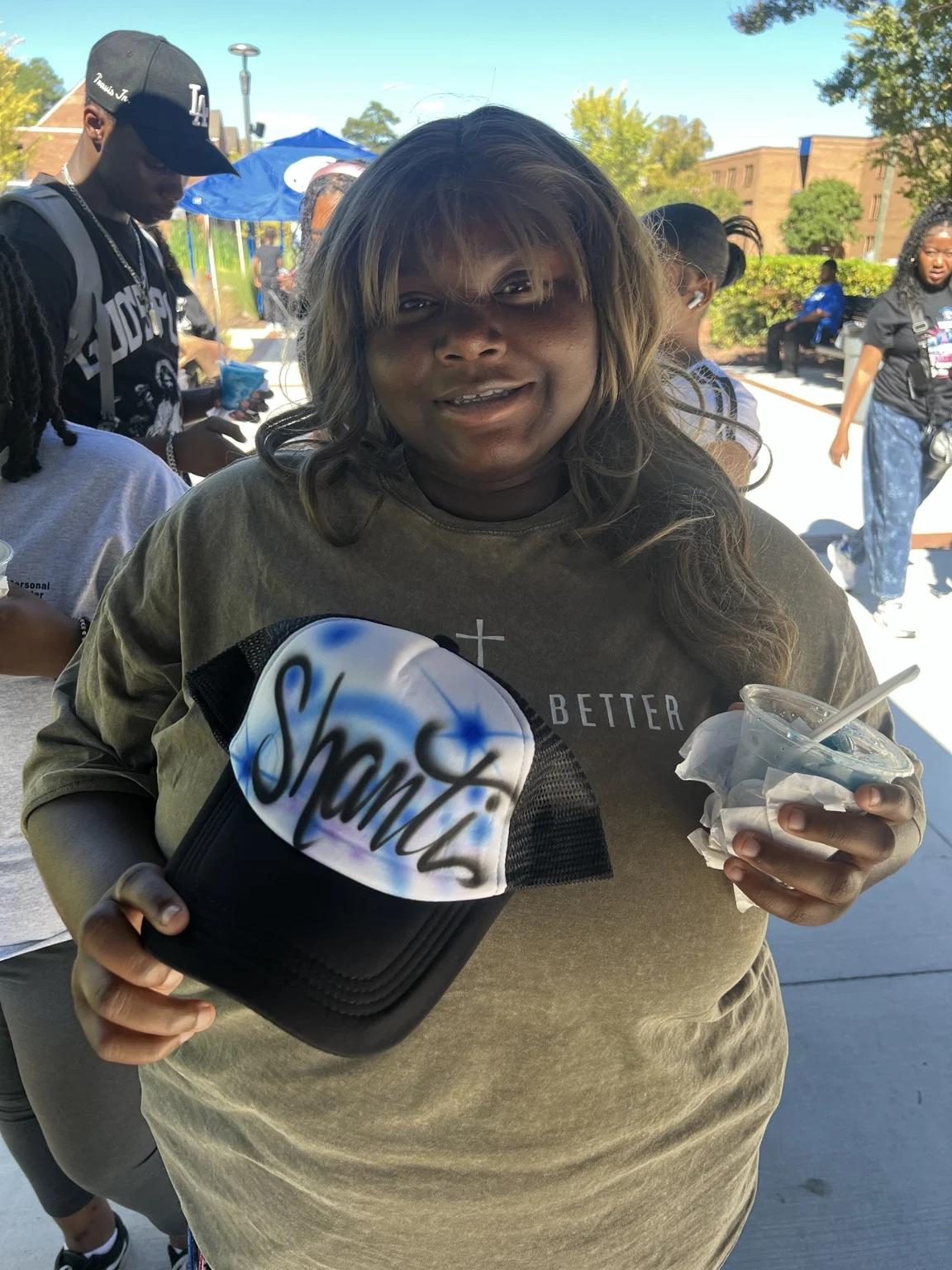
Campus events often use school colors, spirit themes and student names. A visible menu keeps requests aligned with the event while still giving students a personal result. If attendance arrives in waves—after a game, performance or program—staff the ordering point for the peak rather than the average crowd.
Fayetteville State University's homecoming activation shows how custom hats can become wearable school-spirit merchandise. Explore the Fayetteville State homecoming photos and college airbrush event services.
How many orders can the artists complete?
For streamlined designs, 3JS uses approximately 25 standard items per artist per hour as an initial planning estimate. Four artists painting for three full service hours have an estimated capacity of 300 standard items:
Product type, design complexity, guest decisions, breaks, operating conditions and event interruptions can change actual output. Treat the calculation as a planning tool, not a guarantee.
Do not accept more orders than the team can reasonably finish. Set a final-order time based on the remaining queue. Use the artist staffing guide and the event hat quantity guide to compare inventory with production capacity.
How should pickup work?
- Move finished items away from active painting tables.
- Keep each order number attached or clearly paired with the item.
- Arrange orders in a consistent numerical or alphabetical sequence.
- Keep freshly painted surfaces from touching other merchandise.
- Have the guest present the matching ticket, text or screen.
- Confirm the item before handoff and provide brief care instructions.
For more detail, read how long airbrush paint takes to dry at an event and how to keep guest lines moving.
Ordering checklist for planners
- Approve the merchandise, design menu, colors and lettering rules.
- Choose paper tickets, a digital form or another consistent order method.
- Decide whether lead capture, check-in or eligibility happens first.
- Provide a visible menu before the ordering point.
- Assign a greeter, order taker and pickup attendant when volume requires them.
- Protect guest information and avoid exposing contact details on tickets.
- Track sizes and inventory in real time.
- Set a final-order time that matches remaining artist capacity.
Browse past corporate, trade show and university events, review corporate airbrush activation services and share the date, city, guest count, merchandise and service window through the event quote form.
Frequently asked questions
How do guests order custom items?
Guests typically select an approved item and design, choose colors, provide a name or short word, confirm the spelling and receive an order number for pickup.
Should guests order directly from the artist?
That can work at a small event. At a busy event, a separate greeter or order taker keeps artists painting and reduces delays.
Can a trade show require a badge scan before ordering?
Yes. A badge scan, QR form or approved lead-capture step can happen before the order is submitted, as long as the process is clear and efficient.
How do you prevent misspelled names?
Ask the guest to type or write the name, repeat it back and have the guest visually confirm the spelling before painting begins.
How many orders can a station complete?
For streamlined designs, 3JS uses approximately 25 standard items per artist per hour as a planning estimate. Actual output depends on the product, choices and conditions.