A live customization activation can create personalized merchandise, conversation, dwell time and memorable content—but those are not automatically the same as return on investment.
Useful measurement starts before the event. Define the audience, desired behavior and evidence of success. Then collect only the operational and marketing data needed to answer whether the activation achieved that goal.
First, decide what success means
A trade show sponsor may want qualified booth conversations. A university may want broad student participation. A brand launch may prioritize sampling, social content or repeat visits. An employee event may focus on appreciation and satisfaction.
Pick one primary objective and a small set of supporting metrics. If every available number is treated as equally important, the post-event report becomes a list of activity instead of a decision tool.
| Primary objective | Strong core metric | Useful supporting evidence |
|---|---|---|
| Drive booth engagement | Qualified conversations or approved scans | Participation, dwell time and return visits |
| Reward employees or students | Completed guest experiences | Participation rate, wait time and feedback |
| Launch or reinforce a brand | Target-audience participation | On-brand items, content and campaign visits |
| Create campaign content | Approved usable photo/video assets | Public posts, mentions, clicks and engagement |
| Distribute memorable merchandise | Finished items delivered | Completion rate, product mix and leftovers |
1. Count completed guest experiences
Record the number of finished items actually delivered—not only blank products brought to the venue or order tickets written. That completed count is the cleanest operational denominator for cost and participation calculations.
Also track orders that were cancelled, duplicated, unclaimed or unfinished. Those details reveal whether inventory, guest instructions or pickup needs improvement. The guest ordering guide and queue-planning guide explain how a structured workflow makes accurate counting easier.
2. Calculate participation and completion rates
Participation rate compares the number of eligible guests who ordered an item with the number of eligible guests present. Completion rate compares successfully delivered items with accepted orders. Keep the definitions consistent across events.
An event has 500 eligible attendees. If 210 unique guests place orders, participation is 42%. If 204 finished items are delivered, the order completion rate is about 97%.
Those percentages become meaningful when compared with the event goal, operating window, artist capacity and prior programs—not as isolated numbers.
3. Measure throughput and wait time
Throughput shows how many finished items the team produced during active painting time. Approximately 25 standard items per artist per productive hour is a planning starting point for streamlined designs, but the actual rate depends on the product, artwork, guest choices and interruptions.
Track orders by time block instead of reporting only one final total. A first-hour surge, meal break or speaker session can change demand. Pair production with median or sampled wait time so a high item count does not hide a poor guest experience.
Use the artist staffing guide, hat timing guide and mixed-product planning guide to match capacity to the measurement plan.
4. Calculate cost per completed experience
Divide the full activation cost by completed guest experiences. State what the numerator includes: artist service, merchandise, travel, shipping, logo preparation, booth electrical, labor or other event costs. Comparing incomplete cost definitions produces misleading results.
Cost per item and cost per qualified lead answer different questions. If a trade show activation delivers both merchandise and sales conversations, report each metric separately rather than assigning the same item count to every goal.
If the complete activation investment is $6,000 and 240 finished items are delivered, cost per completed experience is $25. If 60 of those participants become qualified conversations under the host’s definition, cost per qualified conversation is $100.
This is a planning example only. It is not a reported result from the events photographed on this page.

5. Connect lead capture to the guest journey
If lead generation is an objective, decide what qualifies as a lead before the event. A badge scan, form submission and sales-qualified conversation are not interchangeable. Report them in separate stages.
Place any approved scan or form at a logical point without forcing guests to repeat information. Explain how data will be used, request only what is needed and follow the host’s privacy requirements. The creative experience should not become a hidden or confusing data exchange.
Use unique order numbers rather than personal data when production tracking does not require identity. If the host wants to connect participation to a CRM, define the authorized handoff and retention process before doors open.
6. Track content without inflating reach
Live airbrushing is visually strong: guests choose designs, watch the work and receive an item made for them. A campaign can measure approved photo and video assets, public posts, mentions, hashtag use, trackable links and landing-page visits.
Separate owned content from guest-generated content and estimated reach from confirmed actions. A potential audience size is not the same as a view, click or event participant. Obtain appropriate permission before using guest images, names or testimonials in marketing.
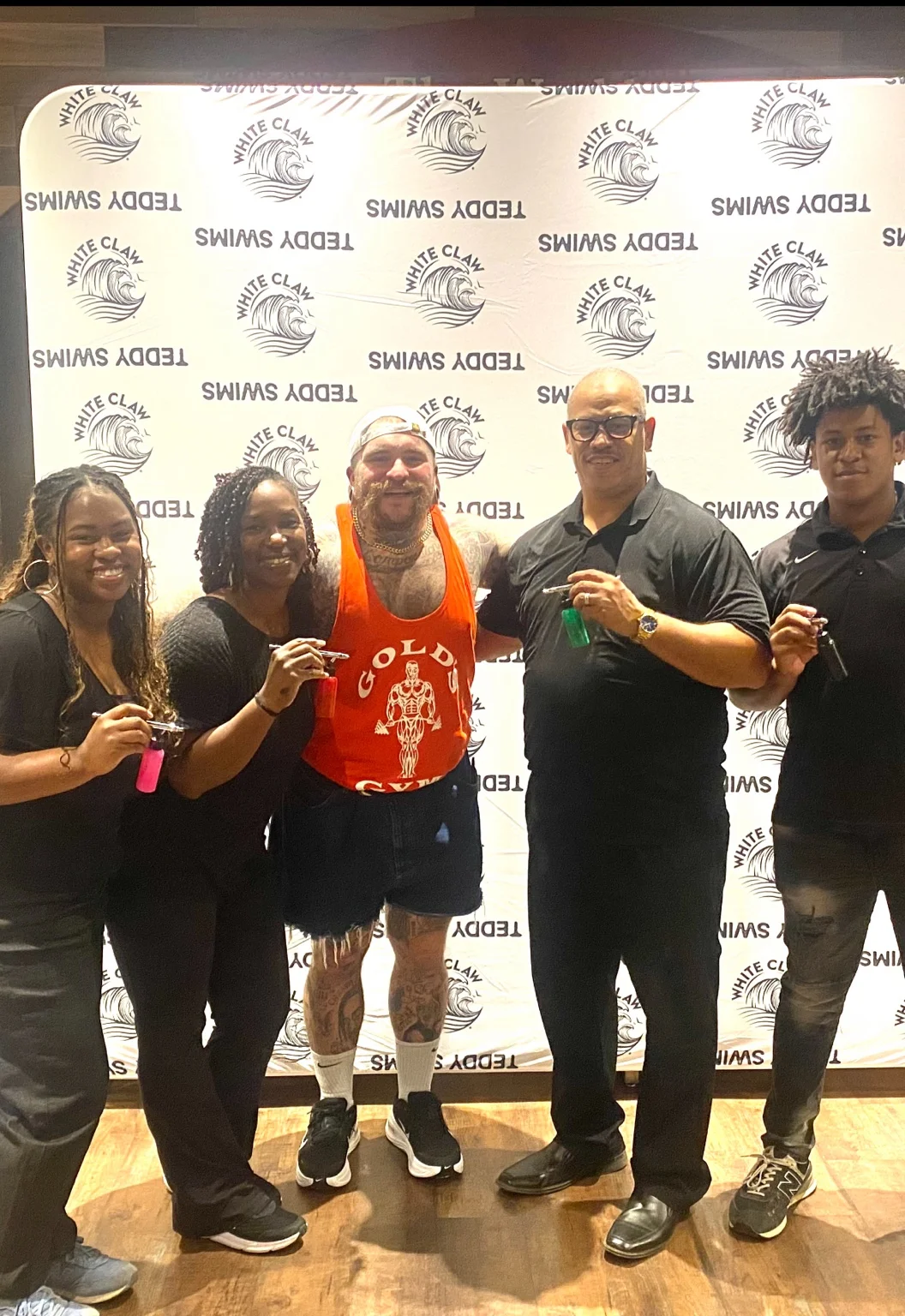
The real White Claw and Teddy Swims activation illustrates how artist interaction can become content as well as an in-person experience. This page does not claim campaign performance figures for that event.
7. Record product and design demand
Track which product colors, sizes and approved designs guests select. That information improves inventory and menus for the next activation. If one choice sells out, document when it happened and what guests selected instead.
Demand data is most useful when tied to availability. “Blue was selected 60 times” means something different if 60 blue items were stocked than if 200 were available. Review the hat quantity guide and design-choice guide.
What do real 3JS activations demonstrate?
3JS has delivered live personalization for corporate and trade show clients including Trustpair in Las Vegas, Bitwise in Atlanta, EY in Boston and White Claw in McLean, Virginia.
Those events show different products, venues and interaction styles. They do not share one universal ROI formula. The correct scorecard depends on the host’s audience and objective, while the artist team supplies reliable operational counts and a guest experience that can support the broader campaign.

Simple post-event scorecard
- Primary business objective and target audience
- Total eligible attendees and unique participants
- Orders accepted, items finished, delivered and unclaimed
- Participation rate and order completion rate
- Production by hour or session and sampled wait times
- Product, size, color and design demand
- Total activation cost and cost per completed experience
- Qualified conversations, scans or leads using defined stages
- Approved content assets, public mentions and trackable visits
- Guest feedback, staff observations and recommended changes
Explore what a live customization activation includes, corporate activation services, real 3JS event galleries and customizable products. Then share your audience, goal and event plan through the quote form.
Frequently asked questions
What is the best metric for a live customization activation?
The best metric depends on the business objective. A trade show may prioritize qualified conversations or scans, while an employee event may prioritize participation and satisfaction. Choose one primary outcome before selecting supporting metrics.
How do you calculate cost per completed customized item?
Divide the total activation cost by the number of finished items successfully delivered to guests. State what is included in the cost, such as artists, merchandise, travel, branding, shipping and booth services.
Should every guest be required to provide contact information?
No. Lead capture should match the event goal, host policy and applicable privacy requirements. If information is collected, explain why, request only what is needed and keep the ordering experience moving.
How can social sharing be measured?
Use an approved hashtag, trackable QR code or campaign landing page, then record public posts, mentions, clicks and usable content with proper permission. Do not treat unverified impressions as completed guest engagements.
When should activation results be reviewed?
Record operational totals during the event, reconcile finished items and leads immediately afterward, and review delayed outcomes such as follow-up responses or content performance after the campaign has had time to work.