Shipping hats, shirts or tote bags ahead can simplify a traveling live airbrush activation, especially when artists fly to the event. The key is choosing a receiver who can accept, store and release the merchandise at the right time.
Do not copy a venue's public address into a shipping label and assume it reaches your booth. A hotel, university, stadium and convention center can each have a different receiving process. Obtain the event-specific instructions before placing the merchandise order.
Where should event merchandise be shipped?
| Receiving option | When it may work | What to confirm |
|---|---|---|
| Client office or campus department | A named host can store and transport cartons | Business hours, storage, vehicle space and event-day delivery |
| Hotel receiving department | The hotel agrees to accept event freight or packages | Correct recipient format, handling fees and release procedure |
| Trade show advance warehouse | The show offers pre-event freight receiving | Official address, approved labels, receiving dates and booth delivery |
| Direct to show site | The show permits delivery during its move-in window | Dock address, appointment rules and delivery hours |
| Approved local logistics contact | The host and artist team arrange a local handoff | Acceptance, secure storage, transport and contact availability |
For trade shows, follow the exhibitor manual. Freeman's exhibitor guide distinguishes advance warehouse receiving from direct-to-show delivery. Warehouse shipments must arrive within the receiving window; direct shipments must follow move-in hours. The same guide explains that material handling covers services such as unloading and booth delivery. Confirm your show's rules and charges. Guidance checked October 17, 2026.
Who owns the shipping plan?
Choose one coordinator to collect receiving instructions and share them with the client, merchandise supplier and artist lead. Agree who purchases the blanks, books shipping, tracks cartons, pays receiving charges and resolves a missing delivery.
If the client supplies merchandise, the artist team still needs the exact product, quantity and arrival details. If 3JS supplies it, the host should provide the approved receiving contact and event instructions. A clear division of responsibilities prevents two suppliers from sending duplicate inventory or each assuming the other handled it.
What belongs on the carton labels?
Use the receiver's required label or template first. When additional identification is permitted, include the event name, exhibiting company, booth or room, receiving contact, on-site phone number, carton number and contents. Do not replace official warehouse or show labels with an informal label.
Event: Corporate Conference • Exhibitor: Client Company • Booth: 214 • Carton: 2 of 6 • Contents: 50 white-front trucker hats • Artist lead: confirmed contact.
This is a packing-list example, not a shipping address or a substitute for the event's official label.
Keep a matching packing list with tracking numbers and carton contents. For shirts, record the size mix. For hats, record style and color. Put a copy inside each carton as well as in the shared event file.
How early should merchandise arrive?
Start with the receiver's permitted dates and the time the artists need access for setup. Work backward using the carrier's current transit estimate and an agreed contingency buffer. Avoid planning delivery for the last possible setup hour, but do not arrive weeks early if the facility will reject or charge for storage.
Set an internal checkpoint before the artists travel: the coordinator should know whether all cartons arrived, where they are and how they will reach the station. A delivered scan is useful, but it does not prove the stock has been counted or moved into the event room.
What should be checked after delivery?
- Confirm the receiver has every carton, using carton numbers and tracking.
- Ask about visible damage and photograph issues promptly.
- Verify the quantity, style, color and shirt sizes when inspection is permitted.
- Record the storage location and the person authorized to release the stock.
- Arrange transport from receiving to the booth or activity station.
- Share the confirmation with the artist lead before load-in.
Keep cartons dry and protected. Avoid storing merchandise where it can be mixed with another exhibitor's freight. If branding was applied in advance, spot-check placement and the remaining personalization area.
Do cowboy hats need a different plan?
They may require more storage and carton space than soft merchandise. Ask the supplier how the specific hats should be nested and packed so crowns and brims retain their shape. Confirm carton dimensions before selecting a shipping service or receiving location.
Do not compress hats solely to reduce box size. Request packaging suitable for the product and allow time to inspect the shipment. The same sample-first approach applies to trucker hats, bags and other blanks: the artist team should approve the surface before the full order ships. Browse event products and hat options for live customization.
What if a shipment is late or incomplete?
Agree on a response before the event. The coordinator should contact the carrier and receiver, identify which cartons are missing and tell the artist lead what stock is available. Discuss any local replacement option with the artist team and brand contact before buying it; a different fabric or hat panel may need new approval.
Prioritize a clear guest promise. A smaller approved menu, adjusted item allocation or revised service plan may be more practical than accepting orders for merchandise that has not arrived. Keep any contingency spend and substitutions documented.
Plan leftovers and return shipping before closing
Decide who owns unused blanks, who takes them away and whether branded extras may be kept for another event. Keep reusable cartons and packing materials where the venue allows. Confirm the return destination, carrier pickup, labels and any required outbound paperwork before the artist team departs.
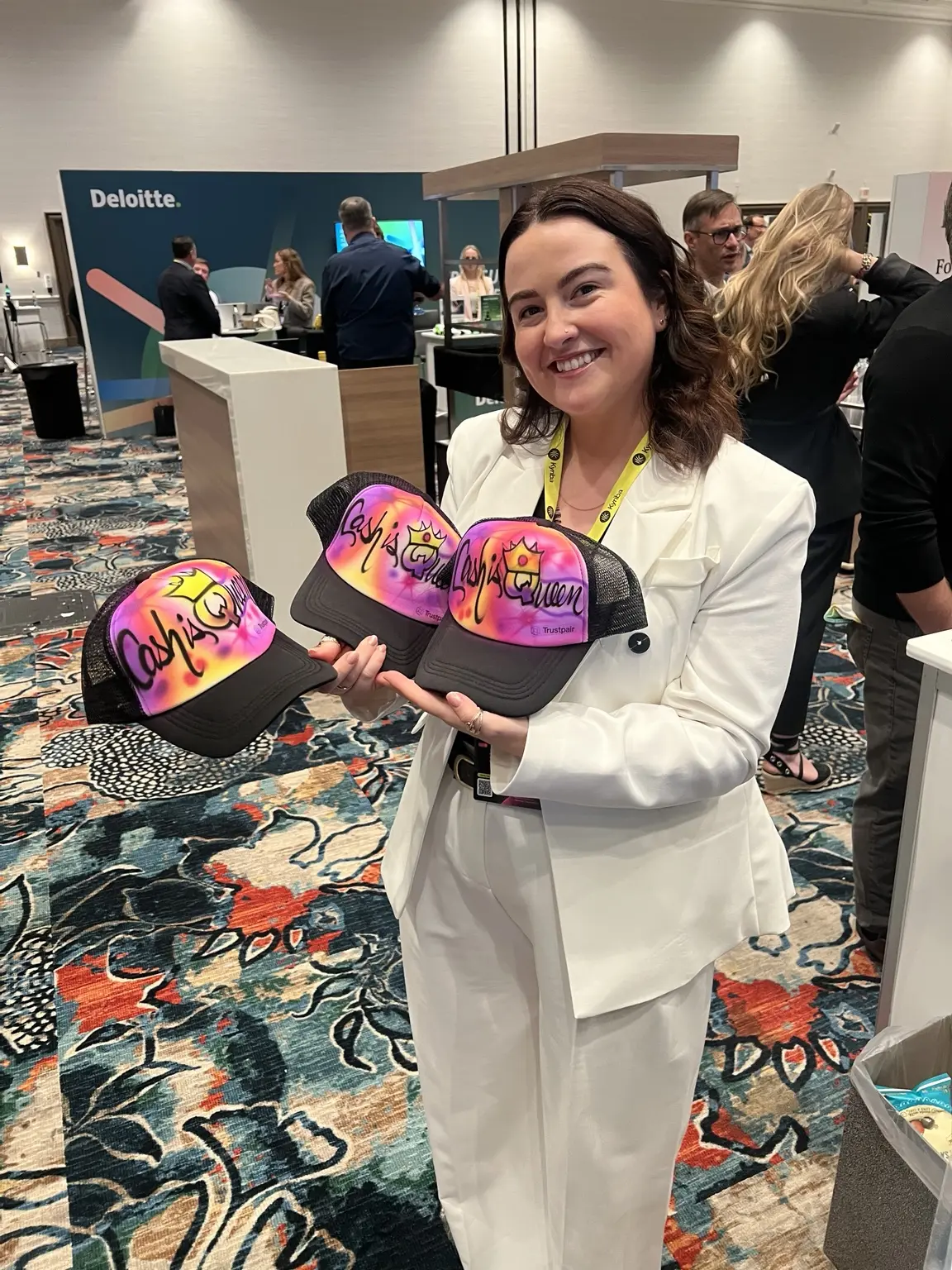
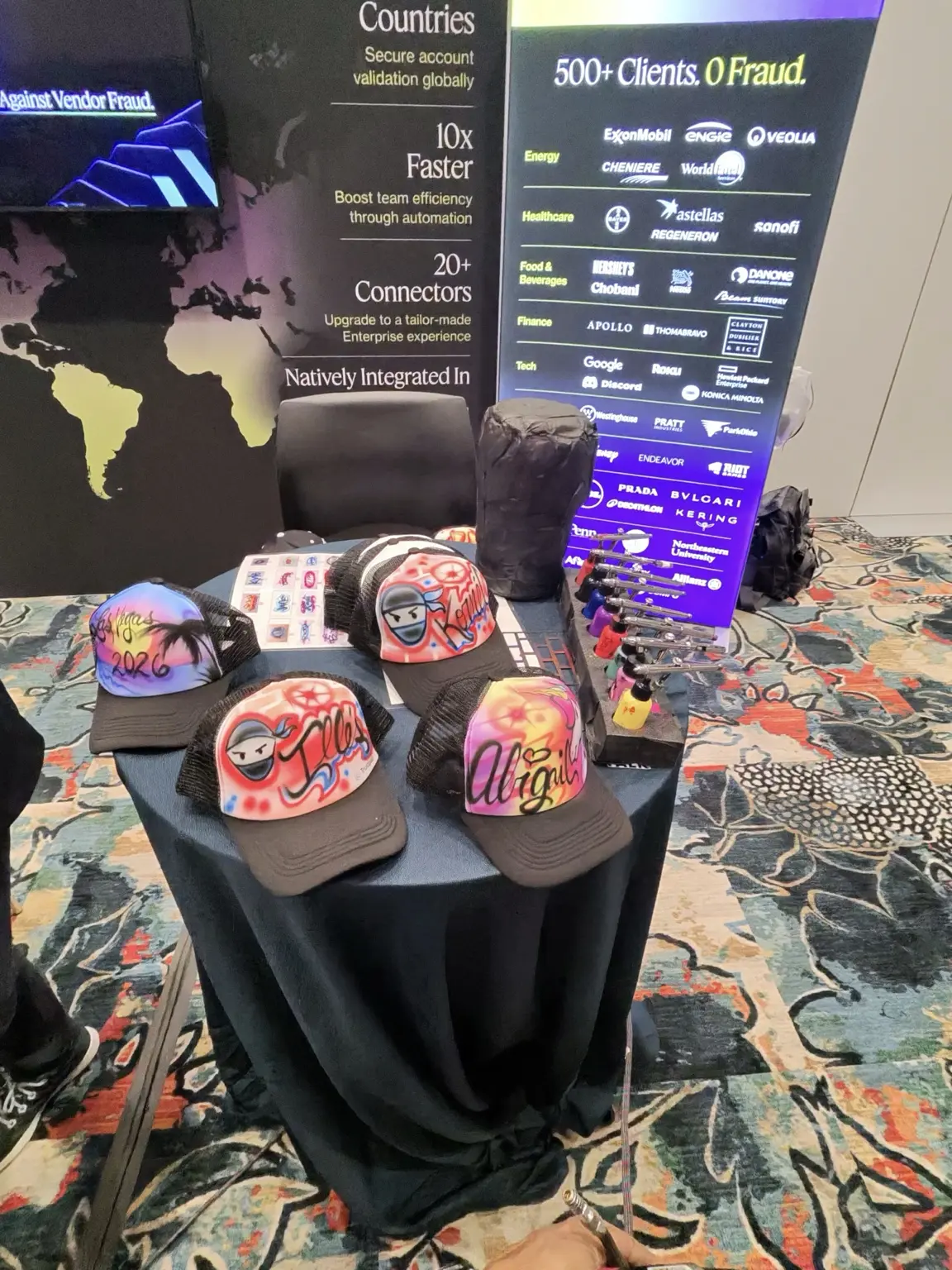
For a multi-day activation, secure overnight storage and agree how the next day's stock reaches the booth. See the real Trustpair Las Vegas event and Orlando conference activation for examples of the merchandise these programs use. Those galleries document the events; they do not prescribe shipping arrangements for another venue.
Shipping checklist to include in the event brief
- Approved destination and receiving contact
- Receiving dates, hours, labels and fees
- Product, quantity, colors, sizes and carton dimensions
- Carrier, tracking numbers and packing list
- Storage and transport to the station
- Delivery inspection and artist access deadline
- Late-shipment contact and approved backup plan
- Leftover inventory ownership and outbound instructions
Read the nationwide travel guide, station setup checklist and trade show planning guide. Explore corporate airbrush services, college events and past work, then send your venue and merchandise details through the quote form.
Frequently asked questions
Can merchandise be shipped ahead of a live airbrush event?
Yes, when the receiving location has approved the shipment and the planner confirms the address, delivery window, labeling, fees, storage and handoff to the artist team.
Should hats be shipped directly to the venue?
Only after the venue or show organizer supplies written receiving instructions. A trade show may require an advance warehouse or specific move-in delivery address rather than the public venue address.
Is a carrier delivery confirmation enough?
No. Also confirm the carton count, condition, storage location and person who will release the merchandise to the event team.
How early should event merchandise arrive?
Work backward from the approved receiving window, carrier transit estimate and event setup deadline. Add a practical contingency buffer, but do not ship earlier than the receiver permits.
Can cowboy hats be shipped ahead?
Yes, if approved. Confirm carton dimensions and packing with the supplier, protect the crowns and brims, and ask the receiver about storage space and handling charges.