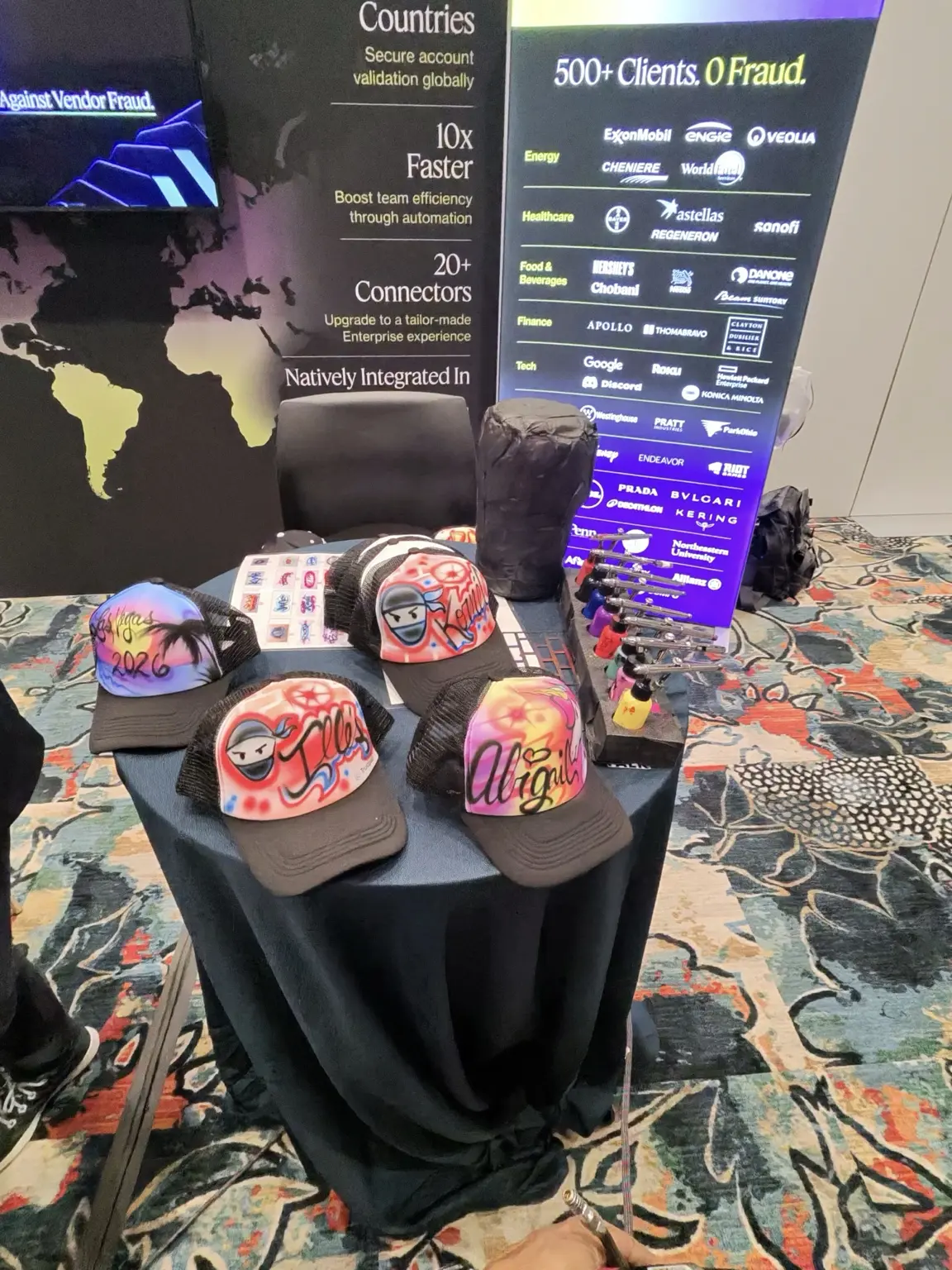
A practical starting estimate for 300 streamlined, live-personalized hats is 12 artist-hours: 300 hats ÷ approximately 25 hats per artist per productive hour.
That could mean four artists painting for three productive hours, three artists for four productive hours or another combination. It does not mean every four-artist, three-hour event is guaranteed exactly 300 hats. The design menu, hat style, guest arrival pattern, breaks, ordering and final pickup plan all affect the result.
Basic staffing scenarios for 300 hats
| Artists | Productive hours needed | Basic capacity math | Planning note |
|---|---|---|---|
| 1 artist | About 12 hours | 1 × 12 × 25 = 300 | Usually impractical for a short live event |
| 2 artists | About 6 hours | 2 × 6 × 25 = 300 | Requires a long, steady production window |
| 3 artists | About 4 hours | 3 × 4 × 25 = 300 | Needs nearly all four hours to stay productive |
| 4 artists | About 3 hours | 4 × 3 × 25 = 300 | Mathematical starting point for a three-hour target |
| 5 artists | About 2.4 hours | 5 × 2.4 × 25 = 300 | Adds recovery room for surges or interruptions |
| 6 artists | About 2 hours | 6 × 2 × 25 = 300 | Requires enough tables, power and guest flow |
These are illustrative planning calculations based on standard, streamlined work. They are not reported production totals from the events pictured and are not guarantees. Confirm the exact hats, artwork, personalization limits and productive window before finalizing the team.
Productive time is different from event time
A cocktail party advertised from 6:00 to 9:00 p.m. does not always provide three full painting hours. Guests may arrive gradually, speeches may pause ordering, artists need a brief startup check and the last orders must be accepted early enough to finish before breakdown.
Build the schedule backward from the required final pickup. If the last finished hats must be ready at 9:00, the order cutoff might occur before 9:00 depending on the queue. Tell guests that cutoff time clearly instead of accepting more orders than the team can complete.
Four artists × 3 productive hours × approximately 25 standard hats = approximately 300 hats.
If only 2.5 hours remain productive after arrival, announcements and the final cutoff, the same basic math becomes approximately 250 hats. The host can add staffing, extend production, simplify the menu or lower the target.
Design complexity can change the rate
Names, short words and a tested set of approved graphics are easier to schedule than portraits, complex scenes, multiple logos or unlimited revisions. Hat construction matters too: a smooth foam trucker-hat front behaves differently from a curved or heavily seamed surface.
Prepare a visible design menu and define the amount of personalization included. If guests can choose names and colors, record spelling before the order reaches the artist. Review design-menu planning and the best hat types for live events.
Artist count must match the physical setup
Adding artists only helps when the venue can support their workstations, compressors, tables, chairs, lighting and safe cord routes. The guest ordering and pickup areas must also handle the higher flow.
Confirm the footprint and circuits with the venue. Use the setup checklist and power-requirements guide. For a very large team, assign a lead who coordinates artists, replenishes hats and resolves order questions without stopping production.

Do not put 300 guests in one line
A long line is not the same as strong engagement. Use a separate ordering point, numbered tickets, scheduled groups or a host-approved notification method. Route each order to an available artist and keep finished hats in a labeled pickup area.
Record the guest identifier, correct spelling, hat color, approved design and order number. Display samples before guests order so decisions do not happen at the artist table. Read how guests order custom items and how to keep event lines moving.
Plan the 300 hats as inventory, not one pile
Count hats by style and color. Decide whether every guest receives the same blank or chooses among options. If a popular color runs out, the ordering team should know which alternatives are approved.
Keep a small operational reserve separate from the public display until the event plan says it can be released. Damaged blanks, approved VIP holds or a second session can otherwise reduce the quantity available to the main line. Use the hat inventory guide and advance shipping checklist.
What has worked at real 3JS events?
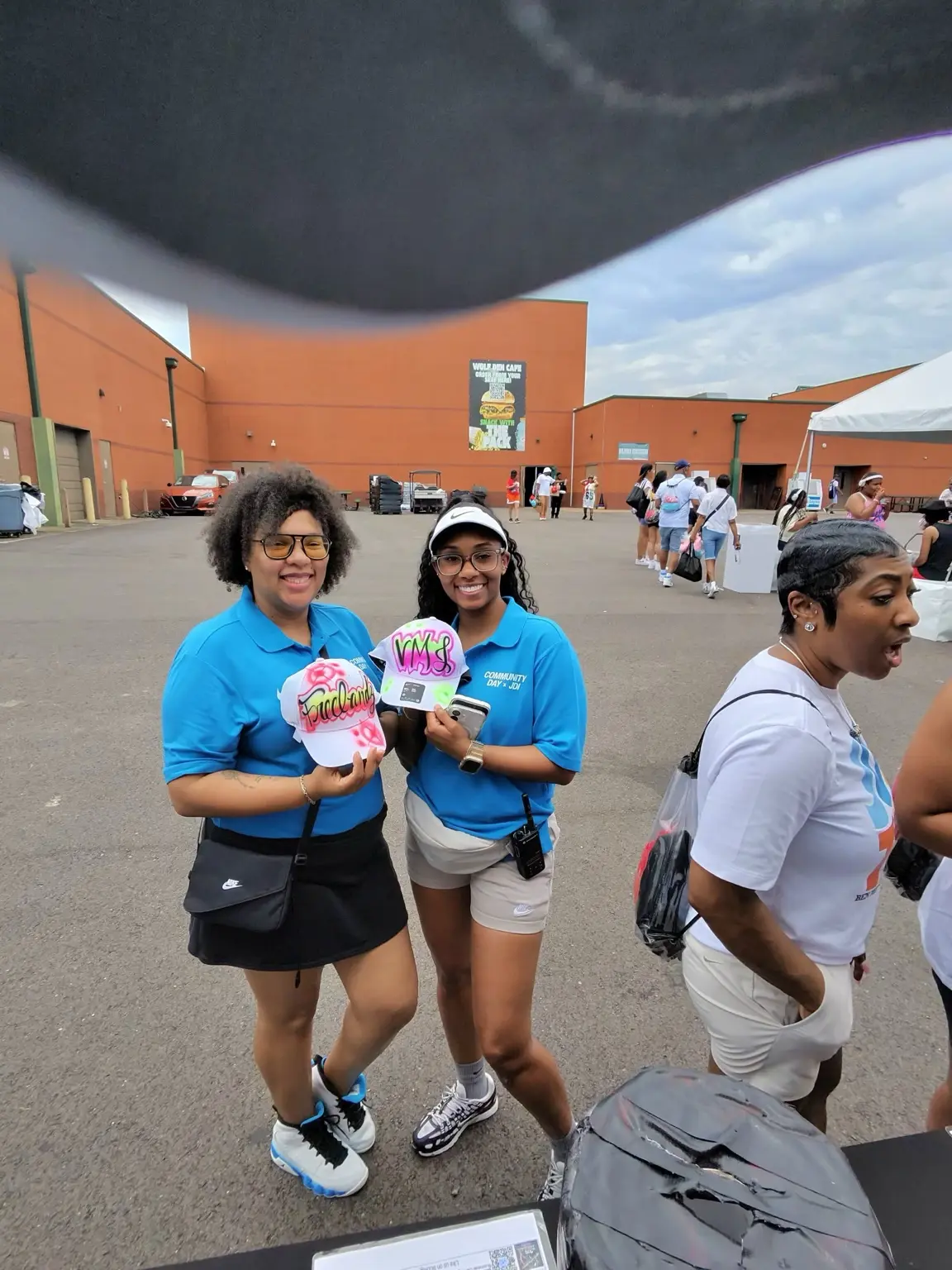
3JS has managed multi-artist hat activations at large university events such as High Point University, corporate programs including Trustpair in Las Vegas, and branded retail experiences such as Nike in Memphis.
Those events demonstrate experience with different guest audiences, team sizes and branded hats. The staffing table on this page is a planning model, not a claim that each photographed event produced 300 hats or used the same hourly rate.
When should you add artists?
Add capacity when the guest window is short, most attendees arrive at once, the designs need more time or the event cannot tolerate a long cutoff. Extra artists can also create resilience if access delays or program interruptions reduce productive time.
More artists are not the only option. The host might extend painting, reduce the target, offer fewer designs, accept advance selections, pre-brand the hats or combine live names with prepared elements. The right choice protects both quality and the guest experience.
Information needed for an accurate 300-hat plan
- Event date, city, venue and exact guest-access window
- Total attendance and number of guests eligible for hats
- Whether all 300 hats must be completed live
- Hat style, colors, quantity and merchandise provider
- Approved designs, names, logos and personalization limits
- Expected arrival pattern, agenda pauses and final pickup time
- Tables, chairs, power, floor space and load-in rules
- Ordering, ticketing, line and pickup preferences
- Brand approval deadline and sample requirements
- Plan for leftovers, unclaimed hats and any reserved inventory
Explore corporate airbrush activations, college and university events, real 3JS event galleries and custom trucker hats. Then send the schedule and quantity through the event quote form.
Frequently asked questions
How many artists are needed to airbrush 300 hats in three hours?
Four artists is the basic mathematical starting point at approximately 25 standard hats per artist per productive hour. The final plan must also account for design complexity, breaks, guest ordering, startup and the time when orders stop.
Can one artist airbrush 300 hats at one event?
At approximately 25 standard hats per productive hour, one artist would need about 12 productive painting hours. Most shorter events require multiple artists, fewer hats, pre-event production or a combination of those options.
Does a four-hour event provide four full production hours?
Not always. Guest arrival patterns, announcements, breaks, ordering, equipment checks and the final order cutoff can reduce productive painting time. Build those realities into the schedule instead of multiplying the full door-open time.
Do detailed designs reduce the number of hats that can be completed?
Yes. Portraits, multiple design elements, complex logos and unlimited revisions can take longer than streamlined names and approved graphics. Test the exact menu before committing to a quantity.
Should all 300 guests stand in one line?
No. Use a separate ordering point, numbered tickets or timed groups, artist routing and an organized pickup area. The goal is to keep the painting stations working without creating one long guest line.