
A large live airbrush activation is not one long line in front of one artist. It is a coordinated group of parallel stations supported by fast ordering, organized supplies and a separate pickup process.
3JS Airbrushing has scaled from single-artist private events to large university and stadium teams. The core planning question is not simply how many people will attend. It is how many items must be finished, how many live hours are available and when guests will arrive.
Use production demand—not total attendance
A 1,000-person event does not automatically require 1,000 customized items. A corporate booth may approve 250 redemptions. A university welcome event may expect most students to participate. A festival may offer the activation only during selected hours.
First estimate the number of guests who will actually receive an item. Then apply the production formula:
Always round up. Treat the answer as a starting point, then consider design complexity, product type, breaks and crowd surges. The detailed artist staffing guide explains those adjustments.
Artist estimates for 500 to 1,500 items
| Items required | Live service | Base artists | Planning capacity |
|---|---|---|---|
| 500 | 4 hours | 5 artists | 500 items |
| 750 | 4 hours | 8 artists | Up to 800 items |
| 1,000 | 5 hours | 8 artists | 1,000 items |
| 1,450 | 6 hours | 10 artists | Up to 1,500 items |
| 1,500 | 6 hours | 10 artists | 1,500 items |
These figures assume streamlined, event-ready designs and reasonably steady demand. They are planning estimates rather than production guarantees. If every guest arrives during a 45-minute break, the operation needs more parallel capacity than the same number of orders spread across six hours.
Capacity on paper only works when ordering, merchandise and pickup move at least as quickly as the artists.
Build parallel stations—not one oversized station
Each artist needs a defined workspace, chair, table surface, equipment and access to the correct blanks. The floor plan should group stations so the team can share supplies without creating cross-traffic behind the artists.
For a 10-artist activation, planners may use two coordinated banks of five stations with a shared ordering zone and a separate finished-item area. The exact layout depends on the venue footprint, exits, aisles and electrical service.
At High Point University, 3JS has deployed a 14-artist team for a high-volume campus event. That scale requires coordinated arrival, matching supplies and a clear team lead—not simply adding more chairs at the last minute.

Use one fast ordering system for every station
Guests should choose a product, confirm spelling and select from approved designs before reaching an artist. Use consistent order slips, tickets or numbered labels so every station receives the same information.
A focused menu gives guests meaningful choices without turning each order into a long consultation. Short names and event-ready artwork help maintain the approximate 25-item hourly planning rate. For more detail, see how to keep lines moving.
Separate ordering, painting and pickup
High-volume activations work best as three connected zones:
- Ordering: staff confirm eligibility, product, spelling and design.
- Production: artists paint without stopping to manage the full queue.
- Pickup: finished items are organized by name or order number away from the worktables.
For trade shows, lead capture should happen before or after the painting zone. For universities and festivals, event staff can help with crowd direction. The complete live airbrush process guide follows an order from arrival through pickup.
Plan merchandise by product and responsibility
Inventory should match expected orders plus a modest backup quantity. Adjustable hats, canvas bags and similar size-free items are simpler at scale. Shirts and hoodies require a planned size mix and a process for handling substitutions when one size runs out.
Confirm whether 3JS or the client will source, count, transport and retain unused merchandise. Review how many custom hats to order, compare products for live airbrushing and browse the event merchandise options.
Confirm enough power for every workstation
Multiple compressors require a deliberate electrical plan. Ask the airbrush provider for the total load and preferred circuit arrangement, then confirm it with the venue or show electrician. Do not assume a single convenience outlet can support a large artist team.
Power cords, equipment and floor coverings must be arranged so guests cannot trip or enter the artists’ work area. The event setup checklist covers tables, chairs, lighting, space and access.
Assign a day-of operations lead
A large team needs one person who can communicate with the event planner, venue and artists. That lead should know the service target, line-closing time, product counts, approved menu and response plan if demand exceeds capacity.
Client staff should know who controls redemptions and who can approve an operational change. Clear authority prevents mixed instructions from reaching different artist stations.
Large venues add access and security logistics
Stadiums, convention centers and major campuses may require credentials, scheduled dock access, security screening, parking passes and approved equipment lists. Confirm how artists and merchandise enter the building, where the team unloads and how long setup must be completed before doors open.
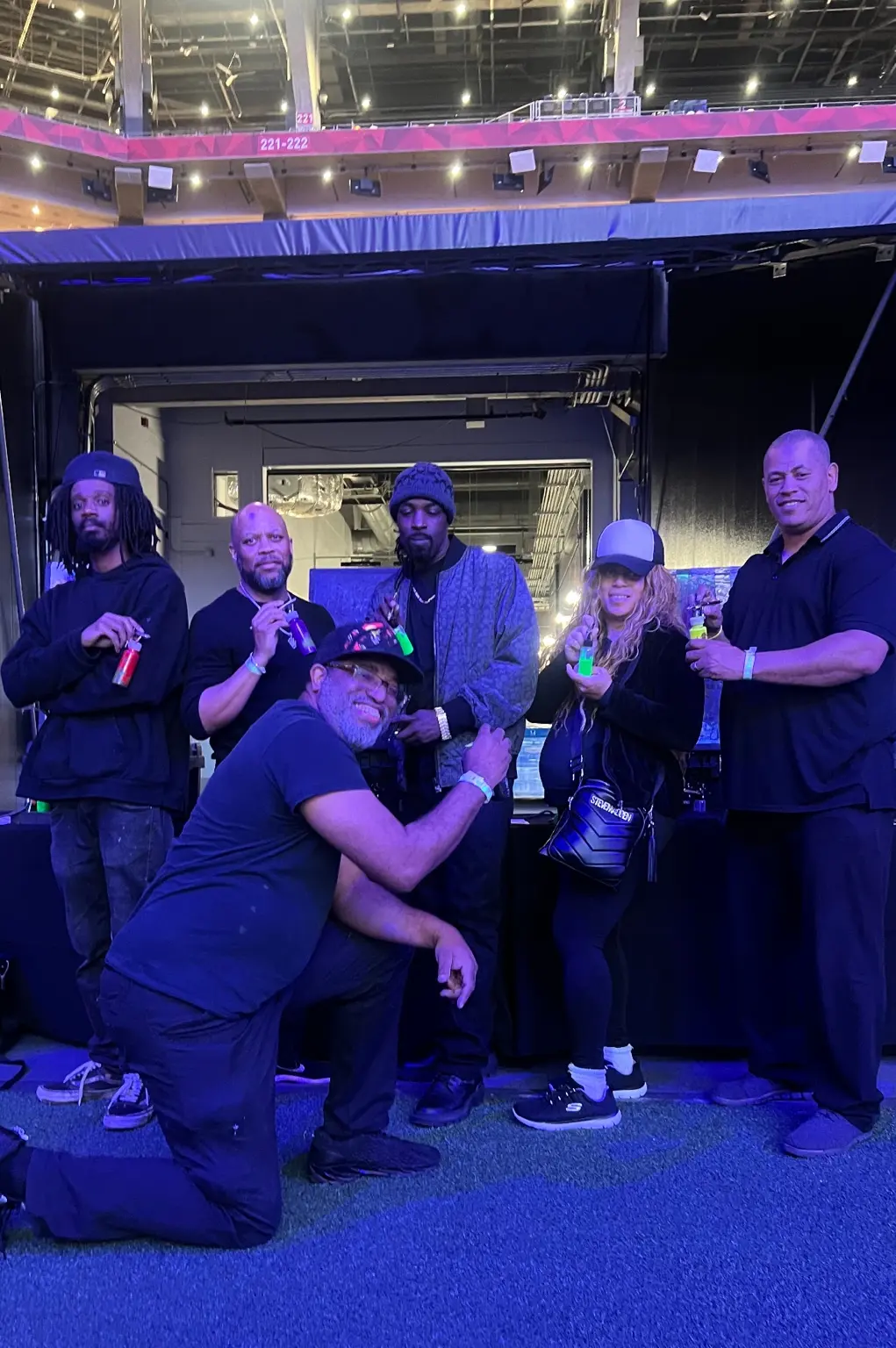
3JS’s work at Mercedes-Benz Stadium in Atlanta demonstrates why the operations plan matters alongside the artwork. Browse more past events and learn about corporate and trade-show activations or college event services.
Decide what happens when demand is higher than planned
Before the event, choose the rule for capacity limits. Options include numbered tickets, a fixed redemption quantity, scheduled pickup windows, one item per guest or closing the line when all remaining artist time is committed.
Do not accept unlimited orders and hope the team catches up after the event ends. A clear cutoff protects the guest experience and the venue schedule. If post-event completion is an approved option, document who handles shipping, addresses and added costs.
Large-event planning checklist
| Plan | Confirm before the event |
|---|---|
| Demand | Expected items, participation rules and peak arrival periods |
| Artists | Base capacity, buffer, breaks and team lead |
| Products | Quantity, sizes, backup inventory and ownership |
| Guest flow | Ordering, queue, production and pickup zones |
| Designs | Approved menu, colors, logo placement and spelling process |
| Venue | Footprint, power, tables, chairs, protection and lighting |
| Access | Parking, load-in, credentials, security and day-of contact |
| Overflow | Redemption limit, final order and post-event policy |
Frequently asked questions
Can live airbrush artists serve 1,000 guests?
Yes, when the artist count, live service window, design menu, merchandise and guest flow are planned together. At approximately 25 event-ready items per artist per hour, 1,000 items over five live hours requires a base team of eight artists.
How many artists are needed for 500 guests?
If all 500 guests will receive one item during four live hours, a base estimate is five artists. Add capacity when demand will arrive in short surges or designs are more complex.
How many artists are needed for 1,500 items in six hours?
Using 25 items per artist per hour, 1,500 items over six hours requires a base team of 10 artists. The final recommendation should also account for breaks, product type, design complexity and crowd arrival patterns.
What does a large live airbrush event need besides artists?
Large activations need sufficient merchandise, multiple workstations, reliable power, protected surfaces, a fast ordering process, queue control, organized pickup, supply storage and a day-of operations lead.