
A live airbrush station is part performance, part personalization bar and part branded giveaway. Instead of receiving the same promotional item as everyone else, each guest participates in creating a product that feels personal.
The exact format changes with the audience, product and venue. A corporate conference may use pre-branded trucker hats and a focused design menu. A university celebration may offer school colors, names and several merchandise choices. A wedding or graduation party may emphasize individual style. The underlying process is the same.
Step 1: The event scope is planned
Before the event, the client and airbrush team confirm the date, venue, live service hours, expected number of customized items, product, branding and guest-flow goals. Those details determine artist count, merchandise quantity, equipment, travel and station size.
3JS generally estimates approximately 25 event-ready items per artist per hour when guests choose from a streamlined menu. That planning rate helps match capacity to demand. A three-hour activation expecting 150 hats may begin with two artists, while a concentrated one-hour giveaway may need more artists to prevent a long line.
For a tailored estimate, use the live airbrush quote checklist and the guide to choosing the right number of artists.
Step 2: Merchandise and branding are prepared
The team confirms whether 3JS or the client will supply the blank products. Trucker hats are a popular choice because the white foam front provides a visible painting surface, but bucket hats, shirts, hoodies, canvas bags, koozies, towels, jerseys and other approved products can also work.
If the item includes a company, university or sponsor logo, that mark may be screen printed, heat applied or produced by another approved method before the event. Artists then add names, colors and artwork live. Docusign, Trustpair and other 3JS clients have used this approach to combine consistent branding with genuine one-to-one personalization.
Client-provided products should be tested in advance. Material, color, coating, seams and construction can change how paint performs. Compare available airbrush products, read our event merchandise guide, or learn how company logos can be added to hats.
Step 3: Artists build the station before guests arrive
Artists arrive before live service to protect the workspace, arrange merchandise, test airbrushes and compressors, set paint colors, display the design menu and organize the pickup area. A typical setup needs power, tables, chairs, lighting and enough room for artists, products and guest flow.
The equipment is compact, but load-in still matters. Stadiums, convention centers and campuses may require loading-dock appointments, credentials, security screening, parking passes, certificates of insurance or a long route from the vehicle to the activation area. Outdoor events also need weather protection and a secure plan for wind, heat or rain.
Our planner’s setup checklist covers the physical requirements, and the indoor airbrushing guide explains power, noise, floor protection and venue approval.
Step 4: Guests choose a product and design
At the station, each guest selects an available item and chooses from the approved design menu. Depending on the event, choices may include a name, short phrase, number, school colors, flowers, flames, stars, sports imagery or another event-specific theme.
A curated menu is important. It gives guests meaningful choices without turning every order into a long design consultation. Clear displays, order slips or a host managing the front of the line can speed decisions before the guest reaches an artist.
Customization works fastest when the guest chooses one primary name or phrase, one approved design direction and a limited color combination before painting begins.
Step 5: The artist paints the item live
The artist positions the product, builds the background color, adds lettering and artwork, then finishes the details. Guests can watch the airbrush process at close range, which makes the station entertaining even for people waiting nearby.
Painting time depends on the product, artwork and number of choices. Event-ready designs are intentionally developed to look impressive while remaining practical for live production. Highly detailed portraits, unlimited revisions or elaborate one-off illustrations are usually better suited to studio work because they would slow the entire guest line.
At a recent Knoxville class reunion, 3JS artists personalized both trucker hats and shirts while guests watched from the outdoor station. At conferences for Trustpair, the team created colorful name designs on branded hats, turning a booth visit into a memorable interaction.

Step 6: The item is checked, dried and handed to the guest
After painting, the artist checks the lettering, color and finish. The item rests briefly when needed before it is handed to the guest or moved to an organized pickup area. Most event items can be carried or worn shortly afterward, although the artist may provide product-specific handling or care instructions.
For smaller events, guests may stay with the same artist from order through handoff. For high-volume activations, numbered tickets, name labels or a separate pickup table can keep the line moving while finished items are sorted.
Step 7: The station repeats the process at event speed
Once service begins, a strong activation runs as a simple loop: choose, order, paint, check and pickup. Staff monitor blank inventory, replace paint, organize finished pieces and adjust the line as attendance changes.
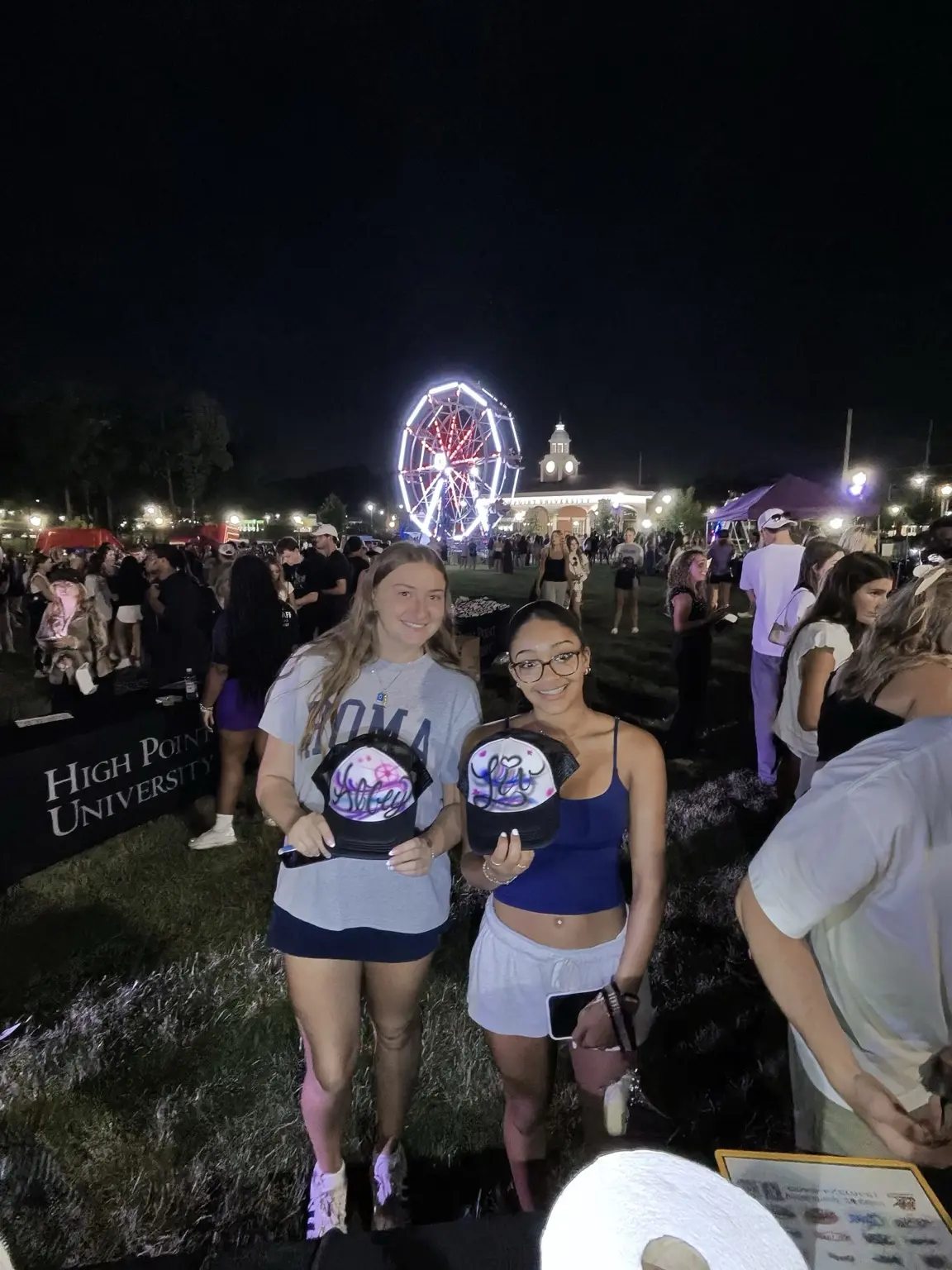
High Point University used 14 artists for a large student event, allowing many orders to move simultaneously. In contrast, one artist can be a good fit for a smaller private celebration with a relaxed schedule. For time-sensitive corporate or sports events, more artists can reduce the wait and serve more guests during a short window.
What the host manages—and what 3JS manages
| Host or venue | 3JS Airbrushing team |
|---|---|
| Confirm schedule, address and access | Recommend artist count and capacity |
| Provide approved tables, chairs and power | Bring airbrush equipment, paint and tools |
| Approve logos, themes and design limits | Prepare the event-ready design menu |
| Communicate security, parking and COI rules | Set up, protect the workspace and test equipment |
| Help communicate how guests join the line | Paint, finish and organize customized items |
If 3JS supplies the merchandise, the team also handles the approved product order. If the client supplies it, the host is responsible for correct quantities, sizes and timely delivery of tested products. The guide to client-provided versus 3JS-supplied hats explains that decision.
Why guests remember live customization
Live airbrushing gives guests three experiences at once: something to watch, a brief personal interaction with an artist and a finished item they helped shape. The product becomes more than a giveaway because the guest chose the name, colors or design and saw it created.
See how this works across corporate, university, sports and private events, then browse real 3JS event work for product and activation ideas.
Frequently asked questions
How long does each airbrushed item take?
Timing varies by product and design. For streamlined event designs, 3JS generally plans approximately 25 completed items per artist per hour.
Can guests choose their own colors and designs?
Usually yes, within a pre-approved menu. A focused selection of names, color combinations and event-ready artwork preserves personalization while keeping the line moving.
Can logos be added before the event?
Yes. Company, school or sponsor logos can often be applied to merchandise in advance, then artists add names and custom artwork live.
Can guests use an airbrushed item immediately?
Most completed items are ready to carry or wear after a short drying and handling check. The artist may give product-specific care instructions when needed.
Does live airbrushing work for indoor events?
Yes. Quiet compressors, protective floor covering, suitable power and an approved workspace allow live airbrushing to operate professionally inside many conference centers, campuses, offices and private venues.