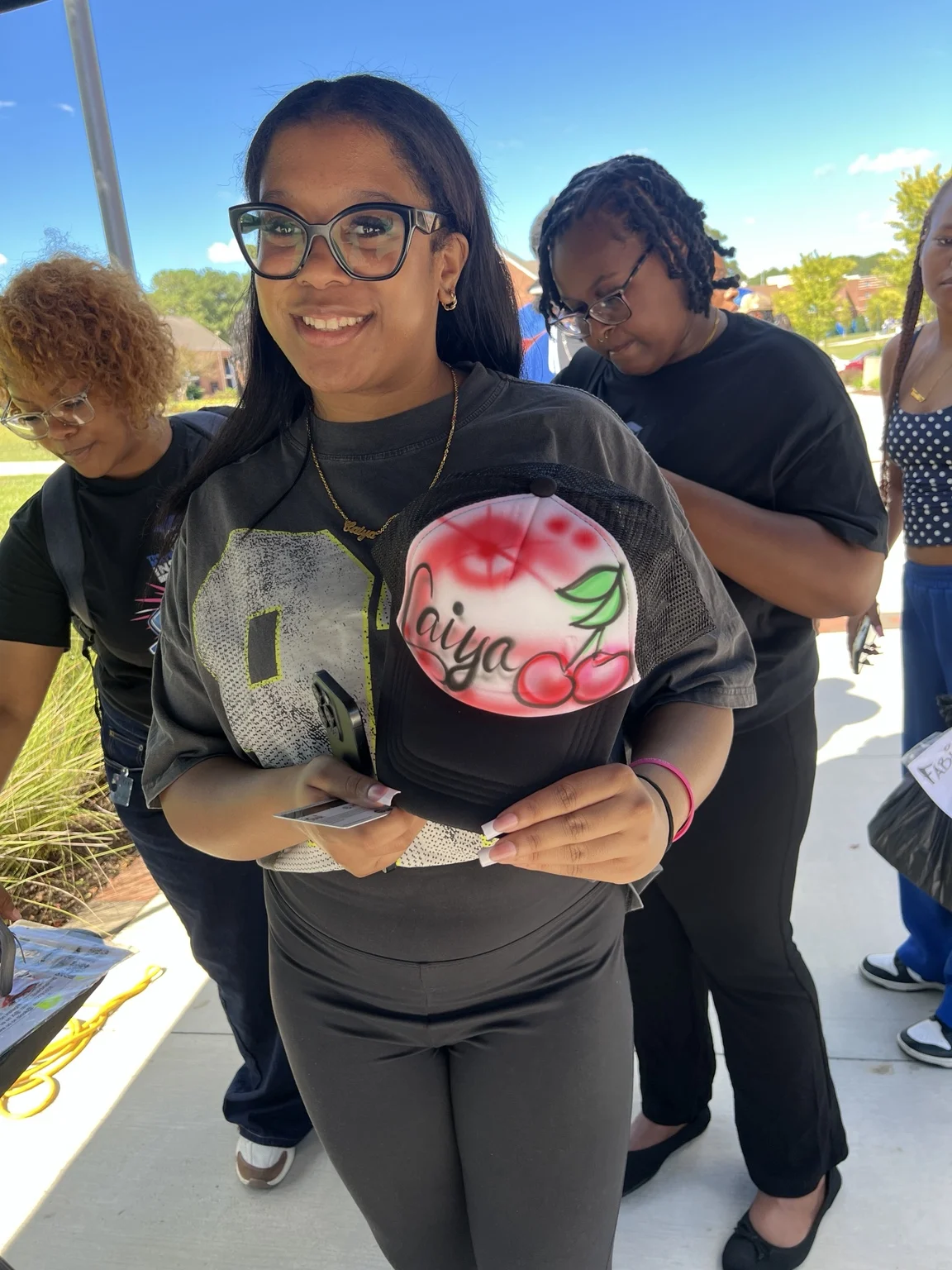
Homecoming combines students, alumni, families, athletes, staff and invited guests in one busy celebration. Live airbrushing gives them a personal keepsake, but the experience works best when merchandise, branding and guest flow are decided before the crowd arrives.
Start with the outcome: Do you want a high-volume giveaway, a smaller VIP experience, a sponsor activation or entertainment that remains open throughout a campus festival? That answer shapes every other decision.
Separate total attendance from the number you plan to serve
A homecoming may attract thousands of people, but the airbrush station might be designed for 150, 300 or 600 completed items. Decide whether access is first come, first served; limited to registered students; reserved for alumni or VIPs; or open through tickets, wristbands or a sponsor interaction.
Publish the quantity and final order time clearly. A fixed item goal gives student affairs, procurement and the artist team a shared operating plan and reduces disappointment after inventory is committed.
| Planning number | What it means | Why it matters |
|---|---|---|
| Event attendance | Everyone expected at homecoming | Helps estimate demand and station visibility |
| Participation goal | Guests invited to order an item | Defines tickets, inventory and messaging |
| Production goal | Items the team plans to finish | Drives staffing and productive hours |
| Reserve quantity | Items held for staff, alumni or VIPs | Prevents reserved inventory from being released too early |
Choose merchandise students and alumni will use
Trucker hats are popular because they are wearable, easy to display and do not require a size run. Shirts create a larger design area but require size planning. Canvas bags are practical for campus life, while bucket hats, pennants and other items can connect to a theme or school tradition.
If you offer more than one product, count each type separately and decide whether every guest may choose freely. The guides to the best custom college giveaways and mixed-product event planning explain those tradeoffs.

Build a school-approved design menu
Students should have meaningful choices without creating an unlimited custom-art request line. A strong menu can combine names, school colors, graduation years, short phrases and approved graphics. The university or sponsor should approve the menu before it is printed or displayed.
Confirm which trademarks, mascots, logos and phrases may be used. If the school wants a printed or embroidered logo already on the merchandise, test the exact finished product and reserve a clear area for live personalization. Read how to manage company or organization logos on custom hats and guest design choices.
Give guests real choices inside a fast, approved system: a limited set of lettering styles, colors, names and graphics that the artist team can repeat consistently.
How many artists are needed?
Approximately 25 standard items per artist per productive hour is a useful starting estimate for streamlined designs. Productive time excludes setup, announcements, breaks, weather holds and the period after the final order cutoff.
| Illustrative goal | Productive time | Starting team | Basic calculation |
|---|---|---|---|
| 150 items | 3 hours | 2 artists | 2 × 3 × 25 = 150 |
| 300 items | 3 hours | 4 artists | 4 × 3 × 25 = 300 |
| 500 items | 4 hours | 5 artists | 5 × 4 × 25 = 500 |
| 600 items | 3 hours | 8 artists | 8 × 3 × 25 = 600 |
These are planning examples, not reported results from the photographed events and not guarantees. Detailed artwork, mixed products, shirt handling, guest decisions and rush periods can change the rate. Use the artist staffing guide or the 300-hat planning example to compare scenarios.
Design the station for homecoming rushes
Demand may spike after a pep rally, game, concert or meal period. Separate ordering from painting so artists remain productive while staff confirm eligibility, spelling, design choice and order number.
- Guest receives or verifies a ticket, wristband or registration.
- Guest chooses an approved product and design.
- Staff records the name, colors and order number.
- The item moves to the next available artist.
- Finished work moves to a numbered drying and pickup area.
Use clear signs for “Order Here,” “Artists at Work” and “Pickup.” The guest-ordering guide and line-management guide provide a complete workflow.
Plan power, shelter and an outdoor backup
Many homecoming activities happen outdoors. Confirm the exact electrical plan with the venue, including circuits, outlet locations and safe cord routes. Provide shelter from sun, wind and rain, secure lightweight materials and protect merchandise from moisture.
Do not wait for bad weather to decide what happens. Name the covered or indoor alternate location, the person authorized to move the activation and the deadline for making that call. Review event power requirements and outdoor airbrush planning.
Use real event experience to shape the plan
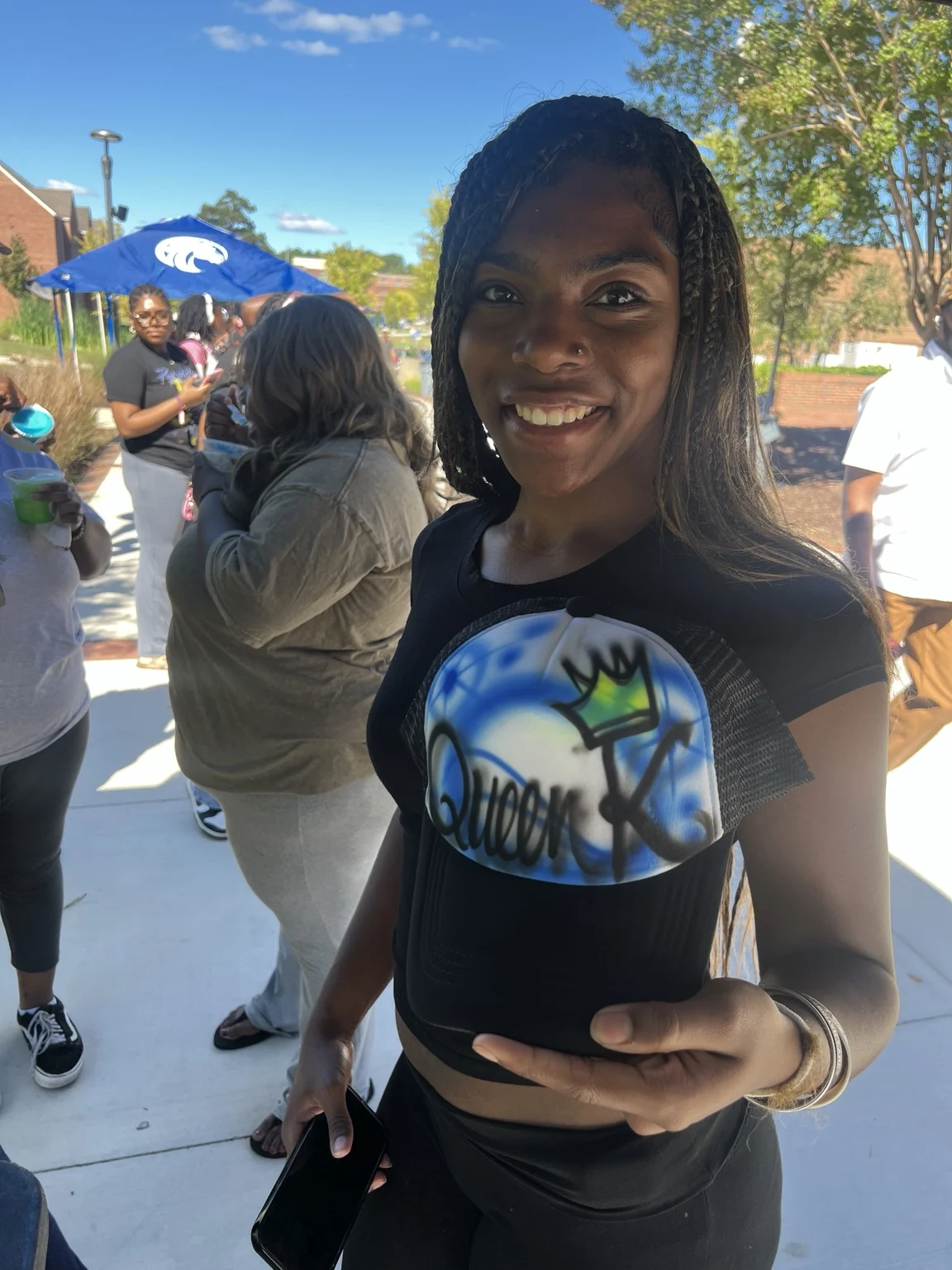
At Fayetteville State University homecoming, 3JS created colorful personalized trucker hats for guests. The event photos show the appeal of individual names, colors and graphics on a consistent product.
3JS has also staffed a 14-artist activation at High Point University and served campus audiences at Florida A&M, Penn State Harrisburg, Roanoke College, the University of Tennessee and other institutions. These examples demonstrate experience with different products, crowd sizes and campus settings; each new event still needs its own capacity and logistics plan.
Build the homecoming timeline backward
- Before contracting: confirm date, venue, event hours, audience and purchasing process.
- Before product ordering: approve item type, colors, sizes, quantity and responsibility for shipping.
- Before promotion: approve trademarks, design menu, participation rules and the service limit.
- Before event week: confirm receiving, storage, parking, load-in, credentials, power and weather backup.
- Before doors open: complete setup, test equipment, count inventory and brief ordering and pickup staff.
- Before closing: stop new orders early enough to finish accepted work and organize final pickup.
If the school requires vendor onboarding, insurance, a W-9 or purchase order, start early. The vendor-document checklist can help the campus buyer and event planner coordinate.
College homecoming planning checklist
- Event goal and sponsor objective
- Attendance estimate and separate production goal
- Eligibility, tickets or first-come policy
- Product types, quantities, sizes and reserve inventory
- School-approved designs, colors and trademark use
- Artist count and truly productive painting hours
- Ordering, queue, drying and pickup layout
- Power, lighting, tables, chairs and shelter
- Indoor or covered weather fallback
- Receiving, storage, leftovers and return shipping
- Contracts, insurance, procurement and payment requirements
Explore college and university airbrush services, event products and real 3JS event galleries. Then share your homecoming date, city, service window and item goal through the event quote form.
Frequently asked questions
How many airbrush artists do you need for a college homecoming?
Start with the number of items you want completed and the productive painting window. Approximately 25 standard items per artist per productive hour is a useful planning estimate, but design complexity, ordering, breaks and the final cutoff affect actual capacity.
What products work best for a college homecoming airbrush event?
Trucker hats, shirts, canvas bags, bucket hats, pennants and other tested products can work. Choose merchandise that fits the audience, season, school branding, budget and event-day production plan.
Can students choose their own designs and colors?
Yes. A pre-approved menu can offer names, school-friendly graphics and color choices while protecting brand standards and keeping ordering efficient.
Can live airbrushing be set up outdoors for homecoming?
Yes, with an approved weather plan, shelter, stable power, lighting, floor or ground protection, secure merchandise storage and an indoor or covered fallback when conditions require it.
How far ahead should a college book homecoming airbrush artists?
Book as early as the event calendar allows, especially for peak homecoming weekends. Early planning gives the school time for procurement, contracts, artwork approval, product ordering, shipping and venue coordination.