
A multi-day conference airbrush activation needs more than a single-day package multiplied by three. Attendees return, session schedules change the flow, merchandise must last and the final day often ends earlier.
Start with a daily operating plan: target items, painting hours, artist count, inventory allocation and pickup deadline. Then agree how the station closes, stores materials and reopens each morning.
What can real corporate examples teach us?
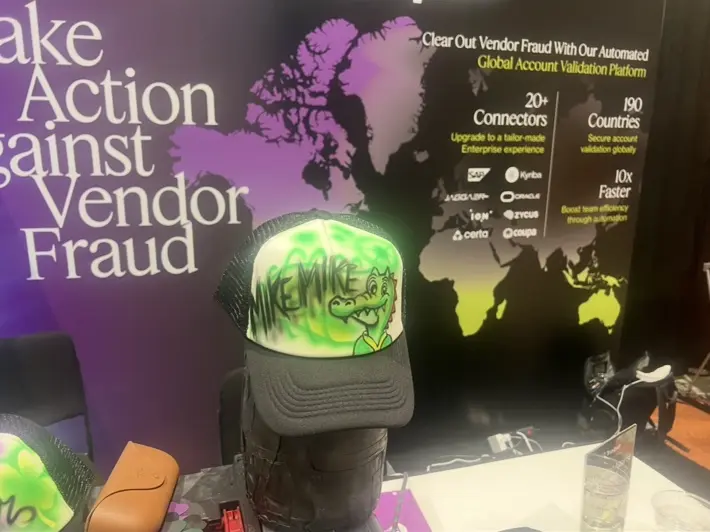
At EY’s Boston event, 3JS personalized trucker hats and baseballs, giving guests different kinds of keepsakes. At Trustpair’s Orlando SSOW conference activation, attendees chose names, colors and designs for custom trucker hats at the booth.
These examples show two useful decisions: whether to offer multiple products and how to combine guest choice with a branded setting. They do not establish a particular multi-day schedule or measured lead-generation result. The three-day plan below is illustrative, not a report of either event.
1. Define the total audience without double-counting
If 300 people visit the conference on each of three days, that does not automatically mean 900 different recipients. Some may attend every day. Estimate unique eligible participants and decide whether the offer is one item per person for the entire conference or a different policy.
Communicate the rule before guests order. If you use a ticket, badge check or redemption record, agree on a simple method with the organizer and collect only information needed to manage the experience. Keep the merchandise limit separate from any sales conversation or optional marketing signup.
2. Build a daily capacity plan
3JS uses approximately 25 standard items per artist per productive painting hour as an initial estimate. Product, design complexity and guest decisions can change output. Confirm the exact menu before relying on the calculation.
| Illustrative day | Artists | Productive hours | Estimated capacity | Example item target |
|---|---|---|---|---|
| Day 1 | 2 | 4 | 200 | 175 |
| Day 2 | 2 | 4 | 200 | 175 |
| Day 3 | 2 | 2 | 100 | 75 |
| Total | Same two-person team | 10 per artist | 500 | 425 |
The lower targets leave some room below the mathematical estimate; they are not a production guarantee or a universal buffer recommendation. Review breaks, session peaks and artwork with the artist lead. Setup, equipment moves and required pauses do not count as productive painting hours.
A final-day target of 175 pieces would not fit the example’s estimated capacity of 100. Add artists, extend the window if permitted or reduce the target. Do not assume unused capacity from day one can solve a day-three shortage. See the staffing guide and trade-show activation guide.
3. Reserve merchandise for later days
Separate opening-day stock from later-day reserves. Count by product, color and apparel size where applicable. Use a closing record: opening inventory, items issued, unusable blanks, finished but unclaimed items and remaining stock.
For the illustrative target above, allocate 175, 175 and 75 pieces, then agree on a separate replacement allowance appropriate to the product. A capacity buffer is not the same thing as extra merchandise. Confirm who can release later-day stock if demand is higher than expected.
One product is easier to count and replenish than several. If offering hats and baseballs like the EY example, set separate allocations and approve each surface. Browse event merchandise, custom trucker hats and the quantity planning guide.
4. Keep branding consistent across days
Approve one reference set covering logos, spelling, colors, artwork placement and personalization limits. Keep samples available to the team so a staffing change does not create a different interpretation on day two.
State what guests can choose and which elements are fixed. More detailed requests should have an agreed response, rather than being accepted until the queue falls behind. Review logo application options and guest design choices.
5. Confirm overnight storage and morning access
Ask whether equipment can stay in the booth, whether valuables must be removed and who is responsible for overnight security. Define a storage location for blank merchandise and keep finished pieces separate. Agree on power shutdown and any venue restrictions; leaving a station set up is not the same as having permission to operate it unattended.
Confirm when artists can enter each morning, how credentials work and whether cleaning crews or other suppliers need access to the space. If the station must be dismantled nightly, include that labor and reopening time in the proposal.
For shipped stock, confirm the receiving address, delivery window, storage fees and handoff contact before dispatch. The shipping guide and setup checklist cover those details.
6. Set a daily order cutoff and pickup policy
Close new orders when the remaining queue fills the available painting time—not merely when the exhibit hall closes. Number orders, confirm guest names in writing and keep pickup separate from ordering so returning attendees do not block new requests.
Next-day pickup can work only if the guest will return and the team has agreed to store and release the item. Explain collection hours and what happens if it remains unclaimed. Do not promise mailing or post-show delivery unless the cost, address collection and responsible party have been agreed.
The final day needs its own deadline because attendees may leave for flights before the hall closes. Coordinate accepted orders with that departure pattern. Read the ordering guide and queue planning guide.
7. Review the operation at each close
Spend a few minutes comparing the item count, remaining stock, outstanding orders and observed demand with the next day’s plan. Make approved changes to staffing or product allocation before reopening, and explain any change in the offer to booth staff.
Track completed items, unique recipients where your process supports that, and sales outcomes separately. Personalization can create an opportunity for conversation, but painted items alone do not prove qualified leads or sales.
What should a multi-day quote include?
- Every event date, city, venue and time zone
- Daily exhibit hours, painting windows, breaks and pickup deadlines
- Unique participant target and the per-person merchandise rule
- Artists per day, product allocations and who supplies blanks
- Approved artwork, sample requirements and design limits
- Travel, receiving, storage, nightly reset and final breakdown arrangements
- Day-of contact, order support and unclaimed-item responsibility
Compare the complete scope rather than only the hourly rate. Explore corporate activation services, the pricing guide and past event work, then send the daily schedule through the event quote form.
Frequently asked questions
Do we need the same number of artists every day?
Not necessarily. Choose staffing for each day’s target items, productive painting hours and expected traffic peaks. A shorter final day may need more artists per hour than a longer opening day.
Can unfinished orders carry over to the next day?
Only when the organizer and artist team agree on next-day access, secure storage, guest communication and pickup. Do not promise next-day collection before confirming that the guest and activation will both be available.
How do we avoid using all the merchandise on day one?
Allocate inventory by day and product, set a one-item-per-person rule when appropriate, and review counts at each close. Keep later-day reserves separate and agree who can release them.
Can equipment stay in the booth overnight?
Confirm permission and security with the organizer and venue. Define storage, access, power shutdown and responsibility for equipment and merchandise; do not assume the exhibit hall is secure storage.
Does conference attendance equal the number of items to order?
No. Estimate unique eligible participants across all days, not the sum of repeated daily attendance. Then match the item target to artist capacity and inventory.